




Rent or Buy? How to Decide What’s Best for Your Lifestyle and Budget
- October 10, 2025
- by
- thetradieguide@gmail.com
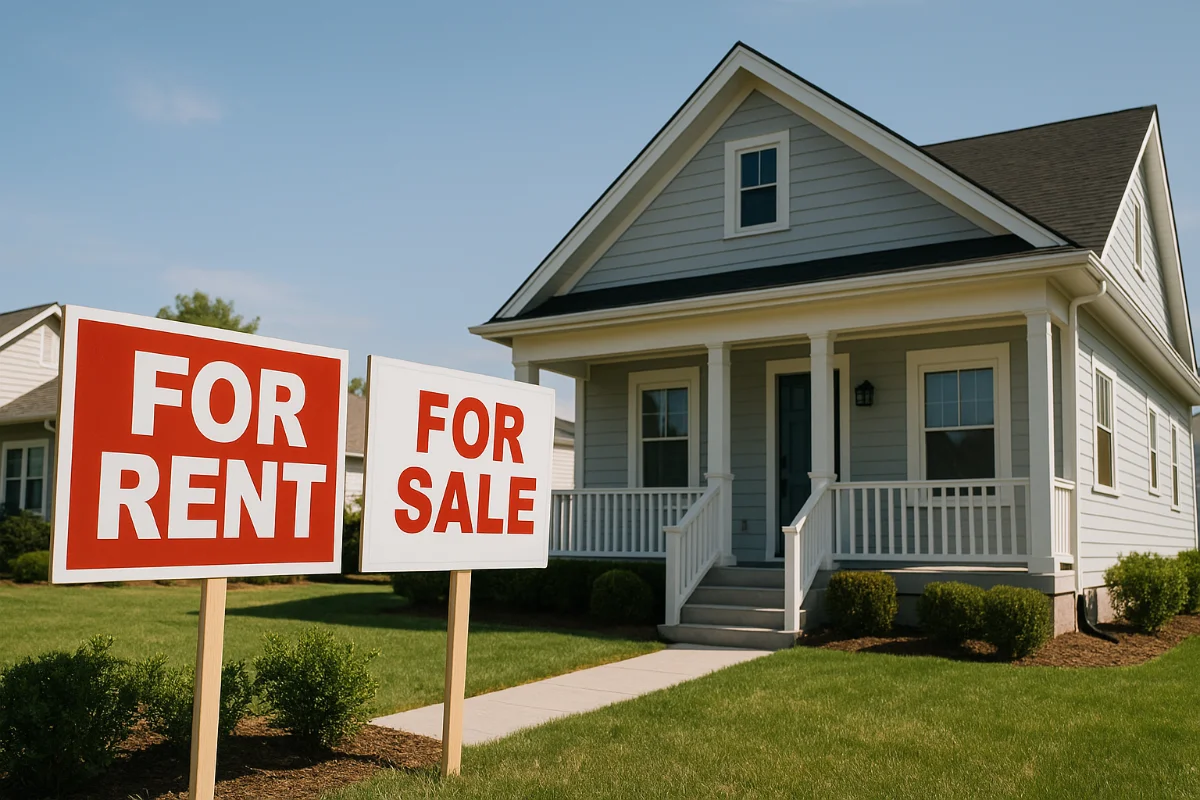
Deciding between renting and buying a home isn’t just a financial equation — it’s a lifestyle choice, a risk assessment, and sometimes (let’s admit it) an emotional wrestling match. In this post, we’ll explore the tradeoffs, crunch numbers, and help you answer the question: renting vs buying housing — what truly makes sense for you in Australia today?
By the end, you’ll be able to evaluate your situation, imagine future scenarios, and make a decision that aligns with both your wallet and your way of living. Let’s dig in.
At a Glance: Quick Overview
- Renting often wins on flexibility, lower upfront costs, and fewer maintenance headaches.
- Buying can shine when you stay long term, build equity, and are willing to manage costs and responsibilities.
- Many Australians are turning to “rent-vesting” — renting where you want to live, buying where it’s cheaper — as a hybrid strategy. (Westpac)
- In most Australian capital cities, assumptions show mortgage repayments take up a larger share of income than rent under typical conditions. (Yourmortgage.com.au)
- But: location, interest rates, personal goals, and timeframe can tip the balance either way.
Want to dive deeper? Read on — we’ll walk you step by step, run a quiz, map out scenarios, and end with a decision framework.
Setting the Stage: Australia’s Housing Landscape (2025)
Before we compare rent vs buy, it helps to know where we sit right now.
Key Market Facts
- Rental affordability is at its worst in at least 18 years. Rents have grown faster than incomes. (REA Group Ltd)
- The national vacancy rate remains tight (often around or under ~1.5 %), putting upward pressure on rents. (InvestorKit)
- In 2024, home prices rose ~4.9%, and rents increased ~4.8% in many areas. (Australian Property Update)
- In major capitals, owning is often more expensive than renting (on a pure monthly cost basis), especially when including all the hidden costs. (Yourmortgage.com.au)
- Yet property yields remain nontrivial: e.g. average gross yields for apartments in Australia hover around ~5 %. (Global Property Guide)
- A growing share of first home buyers (~54%) are considering rent-vesting — buying in cheaper areas while renting where they want to live. (Westpac)
So: the playing field is tough. Neither renting nor buying is a guaranteed “win.” Your personal variables will matter a lot.
Rent vs Buying Housing: Key Comparison Factors
Below is a breakdown of the main dimensions you should compare when evaluating rental vs buying housing.
| Factor | Renting | Buying | Note / What to Watch Out For |
|---|---|---|---|
| Upfront cost | Bond + rent in advance + moving fees | Deposit (often 10–20 %), stamp duty, legal fees, loan costs | Many struggle to save a deposit, especially in high-cost cities (Yourmortgage.com.au) |
| Monthly cost | Rent, utilities, sometimes minimal maintenance | Mortgage, insurance, council rates, maintenance, strata fees, more | Ownership has more variability and unexpected costs |
| Flexibility / mobility | High — you can move when your lease ends | Lower — selling or renting out is a process | Good for people who anticipate job changes, relocation, etc. |
| Equity & wealth building | None (rent payments go to the landlord) | Over time, you own more of the home and may benefit from capital gains | Requires time and stable market |
| Control & personalization | Limited — you must abide by landlord/lease rules | High — renovate, paint, change things (with proper permits) | Ownership gives freedom, but also responsibility |
| Maintenance & risk | Landlord is responsible | You are | Budget for repairs, wear & tear, insurance, cost escalations |
| Tax & incentives | Few (renters rarely get tax breaks) | Possible benefits (depending on your situation) | Also potential downsides (property taxes, interest, negative gearing) |
| Time horizon effect | More costly over very long periods (lost opportunity cost) | More beneficial if you stay long term | The “break-even” horizon depends on market, rates, and costs |
if you’re staying put for < 5 years, renting often looks safer and simpler. If you plan to stay for 10+ years, buying might tilt ahead — but only if you’re financially ready and mentally prepared.
Mini Quiz: Which Side Are You Leaning?
Answer these 5 quick questions (yes / no / maybe). Tally your yes’s.
- I expect to live in my current city/suburb for at least 7–10 years.
- I can comfortably afford a deposit (10–20 %) without compromising essentials.
- I have a buffer for repairs, maintenance, and surprises.
- I value having control over my home (customizing, renovations, pets).
- I’m comfortable being tied down and patient with a long-term investment.
- Mostly yes: Buying probably aligns well for you (if market conditions support it).
- Mostly no / “maybe”: Renting gives you flexibility and less risk in the near term.
- Split: You might consider rent-vesting or waiting until more clarity emerges.
(If you tell me your scores, I can interpret them with you.)
A Practical “Quick Guide” Scenario
Situation
Suppose “Alice” is 30, working in Brisbane, and is debating renting vs buying. She’s considering moving in 5–8 years. She’s got some savings but not a full 20 % deposit. She values being close to amenities but also cares about building wealth.
Common Challenges
- Saving enough for a deposit without sacrificing living standards
- Uncertainty over where she’ll be in 5 years — job could change or she may get a partner
- Hidden costs of ownership (maintenance, insurance, rates, etc.)
How to Solve It (tips)
- Start with a realistic “all-in cost” estimate (mortgage + maintenance + rates) and compare with projected rent in the same area.
- Target a 10–15 % deposit, not 20 %, and explore first-home buyer grants or shared equity schemes.
- Consider rent-vesting: buy in a more affordable suburb and rent in the lifestyle area.
- Factor flexibility cost: the “price” of being able to move easily is real — don’t ignore it.
- Use a rent vs buy calculator to simulate cash flows over 5, 10, 15 years.
Why It Works
This approach gives a more balanced, realistic view. It avoids romanticising ownership or valorising renting — instead, it helps weigh tradeoffs in your personal context. Alice can see the cost of staying too flexible or the risk of overcommitting.
Deep Dive: Hidden Costs & Realities You Might Overlook
Even “obvious” differences have caveats. Let’s dive into them.
- Maintenance & repairs: Roof leaks, AC breakdowns, pest control — these surprise you, and in a rental you mostly dodge them.
- Insurance & strata / body corporate: In strata apartments, strata levies can escalate over time.
- Stamp duty & transaction costs: Every time you buy (or sell), you pay.
- Opportunity cost: Money tied up in deposit or home equity may have earned returns elsewhere.
- Market risk: House prices are not guaranteed to rise. In some periods, capital loss is possible.
- Mortgage interest rate risk: If rates rise, servicing your loan may strain your budget.
- Forced sale risk: If life shocks hit and you need to sell during a downturn, you may incur losses.
Don’t let the “ownership dream” blind you to what you must manage.
Strategies & Hybrids: The Rise of Rent-Vesting
As mentioned, rent-vesting is gaining traction in Australia.
What is rent-vesting?
You rent a home in the locale you desire while owning property in a more affordable (potentially growth) area. The idea: you live where you want, but invest in where you can afford.
Why many Australians are doing it
- Westpac reports more than half (54 %) of first-home buyers are exploring rent-vesting. (Westpac)
- It allows participation in ownership without being forced into a pricey area.
- You can capture long-term capital growth on the owned property, while preserving flexibility.
Potential challenges
- You become a landlord (for the property you own) — that brings hassles.
- You may sacrifice ROI if the “buy” location underperforms.
- You’ll have two sets of responsibilities (for your rental and your investment property).
The takeaway: rent-vesting is not “cheating.” It’s a tactical, real-world response to tough markets.
What Financial Experts Say (with a Sprinkle of Reality)
“In many capital cities, owning is more expensive than renting — especially when you factor in true all-in costs.”
— Your Mortgage analysis (Yourmortgage.com.au)
“Renting offers flexibility and lower upfront costs; buying gives stability and long-term equity. The choice depends more on your situation than a one-size-fits-all rule.”
— Star Investment commentary (Star Investment Group Australia (SIGA))
It matches what we expect — the “best” option is rarely absolute. It depends on where you are, where you’re going, and how much risk or flexibility you’re comfortable with.
Decision Framework: Step-by-Step
Here’s how you can approach this decision methodically.
- List your priorities
Examples: flexibility, building equity, security, lifestyle location, investment returns. - Set realistic financial bounds
What deposit can you actually save? What mortgage payment can your income sustain? - Project time horizon
How many years do you realistically plan to stay in your area? - Model cash flows
Use a rent vs buy calculator (many are available online). Simulate 5, 10, 15 years — include costs, growth, tax, etc. - Factor risk & buffer
What if interest rates rise? What if your income changes? What if you need to relocate? - Consider hybrid options
If neither pure renting nor pure buying clearly wins, explore rent-vesting or delaying the purchase. - Reassess yearly
Circumstances change — revisit your decision every 2–3 years.
Your Action Plan (Worksheet)
Use the following mini-worksheet (you can copy this into your notebook/Google Sheets):
| Metric / Estimate | Your Number / Notes |
|---|---|
| Monthly budget you’re comfortable paying (housing costs) | |
| Target deposit you can save in 1–2 years | |
| Expected rent in desired area | |
| Expected mortgage repayment (for a property you’d buy) | |
| Estimated annual maintenance & fees | |
| Time horizon (years you expect to stay) | |
| Flexibility priority (scale 1–5) | |
| Growth priority (scale 1–5) |
Once you fill this out, plug into a rent vs buy calculator (there are several Australia-specific ones) and see which side “wins” under your scenario. Adjust assumptions (growth, costs, rent rises) and test sensitivity.
Humor Break: “The Landlord’s Revenge” (a short cautionary tale)
Imagine this: You buy your dream pad, peroxide your kitchen cabinets, and hang your 42-inch TV. Two months later, a pipe bursts. You’re up to your elbows in brown water. That “ownership freedom” suddenly feels like a DIY imprisonment sentence.
Meanwhile, your friend, the renter, just calls their property manager: “Hey, kitchen underwater again?” Plumber arrives. They pay for a pizza while watching.
Moral of the story: ownership gives control — and full responsibility for when things go sideways.
When Renting Makes More Sense (Even If You Really Want to Own)
- You anticipate moving for work, love, or opportunity in 3–7 years.
- You don’t yet have a solid emergency savings buffer.
- You can’t comfortably raise a deposit without compromising other life goals.
- You want to avoid stress of maintenance, repairs, or landlord dramas.
- You value flexibility and low commitment more than equity.
Yes, renting sometimes “feels like paying someone else’s mortgage,” but for many people in tight markets, it’s the pragmatic route.
When Buying Might Be the Better Bet
- You plan to stay ≥ 8–10 years in the same area.
- You can afford a deposit + buffer for surprises.
- You want to lock in payments (hedge rent increases).
- You want creative freedom (reno, pets, customizing, etc.).
- You accept the responsibility (and risk) of property ownership.
In strong growth markets, buying can build wealth; but the margin depends heavily on your assumptions about growth, rates, and cost control.
Real-World Examples & Numbers (Australia 2025 Snapshot)
- In many Australian capitals, mortgage repayments for median homes use a higher share of income than paying rent. (Yourmortgage.com.au)
- In Darwin, where property prices are relatively lower, the gap is narrower, making ownership more viable for some. (Yourmortgage.com.au)
- Some suburbs show mortgage repayments lower than rent — but only under certain assumptions. (Aussie Home Loans)
- Rents have leapt ~40 % since 2020 in many areas, with median weekly asking prices increasing ~$200/week. (The Guardian)
- Rental growth has recently slowed in some capitals, which may ease pressure. (ABC)
These data points underscore that the “right” call can diverge sharply by suburb, buyer profile, timing, and market movement.
FAQs
Q: Isn’t owning always better long-term?
A: Not necessarily. It depends on how long you stay, costs, interest rates, and market growth. If you move often or face costs you can’t absorb, renting might be safer.
Q: What is a rent-vesting strategy — isn’t that cheating?
A: Far from cheating! Rent-vesting is a hybrid where you rent where you want to live and own property in a more affordable area. It lets you capture capital growth while maintaining lifestyle flexibility. (Blink Property)
Q: How many years do I need to stay for buying to pay off?
A: It depends heavily on the market, growth rate, costs, and your mortgage. In many cases, you might need 7–15 years for buying to outperform renting. Use calculators to model this for your area.
Q: What if interest rates rise significantly?
A: That’s a key risk. A buffer in your budget is essential. Models should test “worst case” interest rate scenarios to see if you can still afford repayments.
Q: Are there government grants or incentives?
A: Yes. First home buyer grants, stamp duty concessions, and shared equity or co-ownership programs exist in some states/territories. Always check current state/territory schemes in your location.
Conclusion
Choosing between renting vs buying housing isn’t about finding a universal “better” option — it’s about what fits you right now. Rent gives freedom, light responsibility, and optionality. Buying offers stability, equity building, and control — but demands commitment, risk tolerance, and financial discipline.
Use your priorities, time horizon, and real numbers to guide you. Reassess along the way — life changes, markets shift, and what makes sense today might evolve. If you walked away with one thing: there’s no shame in renting while building strength, or buying when you’re ready. May your home decisions bring peace, not regrets.
Disclaimer
This blog post is for informational and educational purposes only. It does not constitute financial, legal, or investment advice. Always consult qualified professionals before making decisions about property, mortgages, taxes, or investments.
You may also Like
Australia’s Housing Trends Explained: What’s Changing in 2026