


7 Signs You Need Garage Door Service and Repairs Before It Fails
- June 21, 2026
- by
- thetradieguide@gmail.com
Your garage door is probably one of the hardest-working parts of your home. It opens, closes, protects your car, adds security, and usually gets ignored until something goes wrong. Like most household essentials, people rarely think about it… until it starts making noises that sound like it’s auditioning for a horror movie.
That’s why understanding the early warning signs matters.
If you’ve been searching for Garage Door Service and Repairs, chances are your door is already trying to tell you something. This guide will help Australian homeowners recognise the most common signs before a small issue turns into a costly breakdown.
Because let’s be honest, nobody wants to be trapped inside their garage on a Monday morning.
Quick Overview
Here’s the short version if you’re in a hurry:
- Strange grinding, squeaking, or banging noises often signal wear.
- Slow or jerky movement can mean spring or track issues.
- Sagging or uneven doors create safety risks.
- Remote or sensor failures may point to electrical faults.
- Rising energy bills can indicate poor door sealing.
- Frequent breakdowns usually mean it’s time for professional attention.
The earlier you spot these signs, the easier and cheaper repairs usually are.
Want to dive deeper? Keep reading.
1. Your Garage Door Is Making Unusual Noises
Garage doors aren’t silent, but they shouldn’t sound like a metal band warming up.
A little noise is normal. But loud grinding, screeching, or banging often means:
- Worn rollers
- Loose hardware
- Damaged springs
- Misaligned tracks
Ignoring these sounds can turn a minor repair into a major one.
Pro Tip:
If your garage door suddenly gets louder than usual, book a service before something snaps. Springs especially are under extreme tension and can be dangerous.
2. It Opens or Closes Slowly
A garage door should move smoothly and consistently.
If it’s slowing down, hesitating, or moving unevenly, this may be caused by:
- Motor strain
- Spring imbalance
- Dirty tracks
- Lack of lubrication
Australian weather, especially coastal humidity or dry dusty conditions, can make these issues worse over time.
Did You Know?
Most garage door openers are designed to last around 10 to 15 years with proper servicing.
That’s right. Even machines get tired. Shocking.
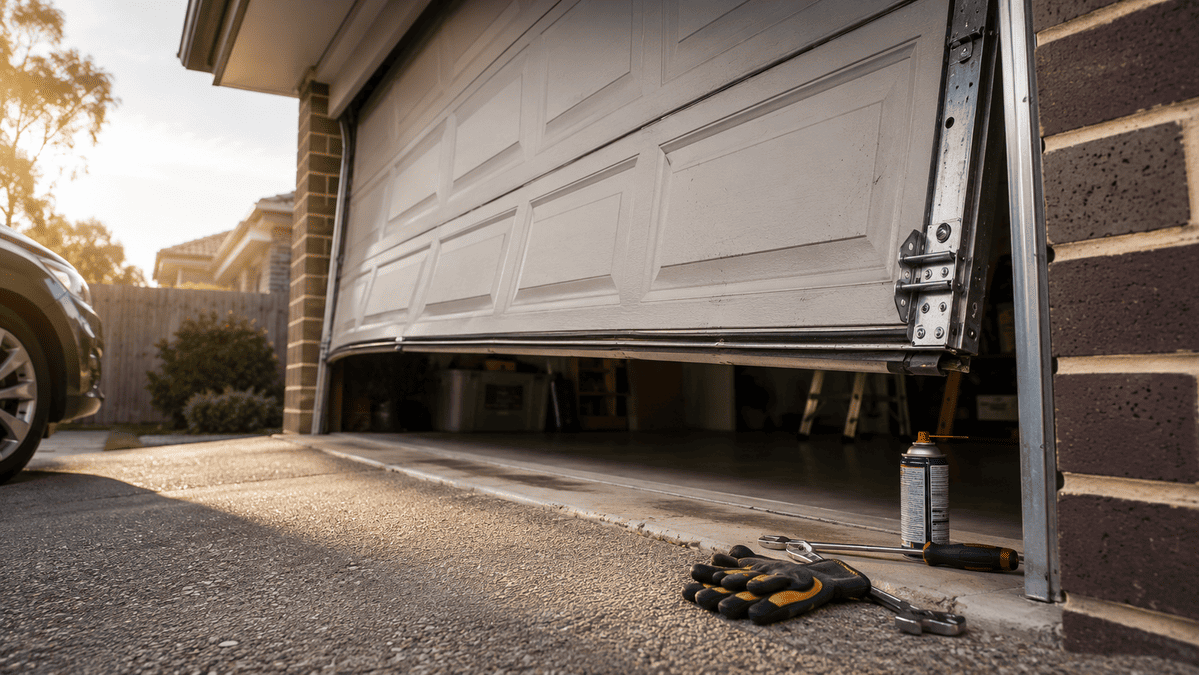
3. The Door Looks Crooked or Uneven
Stand back and look at your garage door while it’s halfway open.
Does one side sit lower?
That’s often a sign of:
- Broken tension springs
- Cable damage
- Track misalignment
This isn’t just ugly. It’s unsafe.
A crooked garage door puts extra stress on the opener and increases the chance of sudden failure.
Important: Never try to adjust springs yourself. They’re basically giant metal traps disguised as hardware.
4. It Reverses for No Reason
If your garage door starts closing and then suddenly reverses, something’s wrong.
Usually, this points to sensor problems such as:
- Dirt blocking the sensors
- Misaligned sensor eyes
- Wiring issues
Safety sensors are designed to prevent injury, which is useful considering humans have a remarkable talent for walking under moving doors.
A professional garage door service can quickly diagnose the issue.
5. The Remote or Wall Switch Stops Responding
When your garage door ignores your commands like a moody teenager, it could mean:
- Dead batteries
- Signal interference
- Motor board faults
- Wiring damage
If changing the batteries doesn’t solve it, the problem may be deeper inside the system.
This is where Garage Door Service and Repairs can save time and frustration.
Because pressing the button harder won’t help. Humans keep trying anyway.
6. The Door Feels Heavy
If you manually lift your garage door and it suddenly feels much heavier than normal, the spring system may be failing.
A balanced garage door should feel relatively light.
Heavy lifting usually means:
- Spring tension loss
- Broken springs
- Opener strain
This puts both your safety and your opener at risk.
Bold truth:
A failing spring is one of the fastest ways to destroy a garage door motor.
7. You’re Constantly Repairing It
If you’ve called for repairs multiple times in the last year, it’s worth asking:
Is the system being properly serviced?
Repeated small problems often point to larger underlying issues like:
- Worn-out components
- Ageing openers
- Structural fatigue
Regular maintenance catches these problems early.
Think of it like dental check-ups. Ignore them long enough, and eventually something expensive falls apart.
Quick Guide: What to Do If Your Garage Door Starts Acting Up
Imagine this:
Your garage door starts shaking, makes strange noises, and takes forever to open. It still works… sort of. But every day feels like a gamble.
Common Challenges
- Is that noise normal or a warning sign?
- Should you repair it now or wait?
- Could it suddenly stop working altogether?
How to Solve It
Inspect the Basics
Look for obvious issues like loose bolts, blocked sensors, or track debris.
Test the Balance
Disconnect the opener and lift manually. If it feels heavy or uneven, get it checked.
Lubricate Moving Parts
Use garage door lubricant on rollers, hinges, and tracks.
Book a Professional Service
A trained technician can spot hidden wear before it becomes dangerous.
Why It Works
Acting early keeps repair costs lower, improves safety, and extends the life of your garage door.
Quick Quiz: Does Your Garage Door Need Attention?
Answer yes or no:
✔ Is your garage door noisier than it used to be?
✔ Does it move slower than normal?
✔ Does it look uneven when opening?
✔ Has it reversed unexpectedly?
✔ Have you had multiple repairs recently?
Results:
0–1 Yes:
Probably okay, but keep an eye on it.
2–3 Yes:
A service is recommended soon.
4–5 Yes:
Book garage door repairs immediately before it fails.
Simple little test. Better than waiting for the dramatic crash.
FAQs About Garage Door Service and Repairs
How often should a garage door be serviced?
Most experts recommend once a year.
Homes with heavy daily use may need servicing every 6 months.
Can I repair my garage door myself?
Some minor maintenance is fine:
- Cleaning tracks
- Lubricating parts
- Replacing remote batteries
But springs, cables, and motors should always be handled by professionals.
How long do garage doors last?
A well-maintained garage door can last 15–30 years, depending on material and usage.
Regular servicing makes a huge difference.
What is the most common garage door repair?
The most common issues include:
- Broken springs
- Sensor alignment
- Roller replacement
- Motor repairs
Pretty standard. Like humans breaking phones.
Is garage door servicing expensive?
Routine servicing is usually far cheaper than emergency repairs or full replacement.
Preventative care almost always wins.
Conclusion
Garage doors rarely fail without warning. The signs are usually there, whether it’s strange noises, slow movement, uneven lifting, or sensor issues. Paying attention to these early signals can save you money, reduce safety risks, and help avoid inconvenient breakdowns.
Regular Garage Door Service and Repairs keep your system running smoothly and extend its lifespan, especially in Australia’s changing weather conditions. If your garage door has been acting differently lately, don’t ignore it. A simple service today could prevent a complete failure tomorrow.
And honestly, that’s a far better outcome than wrestling with a stuck garage door in your pyjamas.
You may also Like