

How Arborist Reports Help Protect Property Owners from Council Issues
- June 24, 2026
- by
- thetradieguide@gmail.com
Trees are a beautiful part of Australian properties. They provide shade, privacy, and sometimes a convenient place for possums to hold midnight meetings. But when trees become part of building plans, removals, or neighbour complaints, things can get complicated fast.
That’s where Arborist Reports become important.
If you’re planning to remove a tree, renovate, subdivide land, or respond to a council notice, Arborist Reports can provide the professional assessment needed to avoid fines, delays, and unnecessary disputes.
For Australian property owners, understanding how Arborist Reports work can save time, money, and a lot of frustration.
Quick Overview
Before we dive in, here’s the short version.
Arborist Reports can help you:
- Understand whether a tree is protected by local council regulations
- Support applications for tree removal or pruning
- Identify safety risks like disease, decay, or structural weakness
- Prevent neighbour disputes over roots or overhanging branches
- Provide evidence during development applications
- Reduce the chance of council fines or legal issues
In simple terms, an Arborist Report is like a tree’s medical record. It tells councils what condition the tree is in and what should happen next.
Want to dive deeper? Keep reading.
What Are Arborist Reports?
An Arborist Report is a professional document prepared by a qualified arborist that assesses the health, structure, and condition of trees on a property.
It usually includes:
- Tree species identification
- Height and canopy spread
- Health and structural condition
- Risk assessment
- Root zone analysis
- Recommendations for pruning, removal, or preservation
Think of it as the difference between saying, “That tree looks dodgy” and actually proving it.
Councils don’t make decisions based on gut feelings. They want evidence.
And yes, trees can absolutely become paperwork. Nature found a way.
Why Councils Often Require Arborist Reports
Local councils across Australia have strict tree protection policies. This is especially common in urban areas where mature trees contribute to environmental health, biodiversity, and neighbourhood character.
You may need Arborist Reports if:
1. You Want to Remove a Tree
Many councils require approval before removal, especially for significant or native trees.
Without an arborist’s assessment, your application may be rejected.
Key point: Not all dead-looking trees are actually dead. Some are just dramatic.
2. You’re Planning Construction or Renovation
Building near trees can impact root systems and structural stability.
Councils may request an arborist report to assess:
- Tree Protection Zones (TPZ)
- Potential root damage
- Structural impact on nearby vegetation
This is common for:
- Home extensions
- Granny flats
- Driveways
- Pools
- New builds
3. A Tree Is Becoming a Safety Risk
Storm damage, disease, and structural weakness can turn a tree into a hazard.
An arborist report helps document:
✔ Leaning trunks
✔ Cracked limbs
✔ Root instability
✔ Fungal decay
This can be critical if a branch decides to audition as a missile during storm season.
The Hidden Council Issues Arborist Reports Can Prevent
Ignoring tree regulations can create expensive headaches.
Here’s what Arborist Reports help avoid:
Fines for Illegal Tree Removal
Some Australian councils issue significant penalties for unauthorised tree removal.
Even trimming can trigger fines if protected species are involved.
Did You Know?
Some councils regulate trees based on trunk diameter, not just species.
That means even “small-ish” trees can still cause big-ish problems.
Delays in Development Approval
Missing required tree assessments can slow down your DA (Development Application).
This often means:
- More paperwork
- Extra consultant fees
- Construction delays
- Angry tradies
And nobody enjoys an angry tradie.
Neighbour Disputes
Tree roots crossing fences. Branches over roofs. Leaves in pools.
Classic suburban warfare.
Arborist Reports can objectively assess:
- Root intrusion
- Structural risks
- Tree ownership responsibilities
Having expert evidence can stop arguments from escalating.
Quick Guide: When a Tree Becomes a Problem
Imagine this:
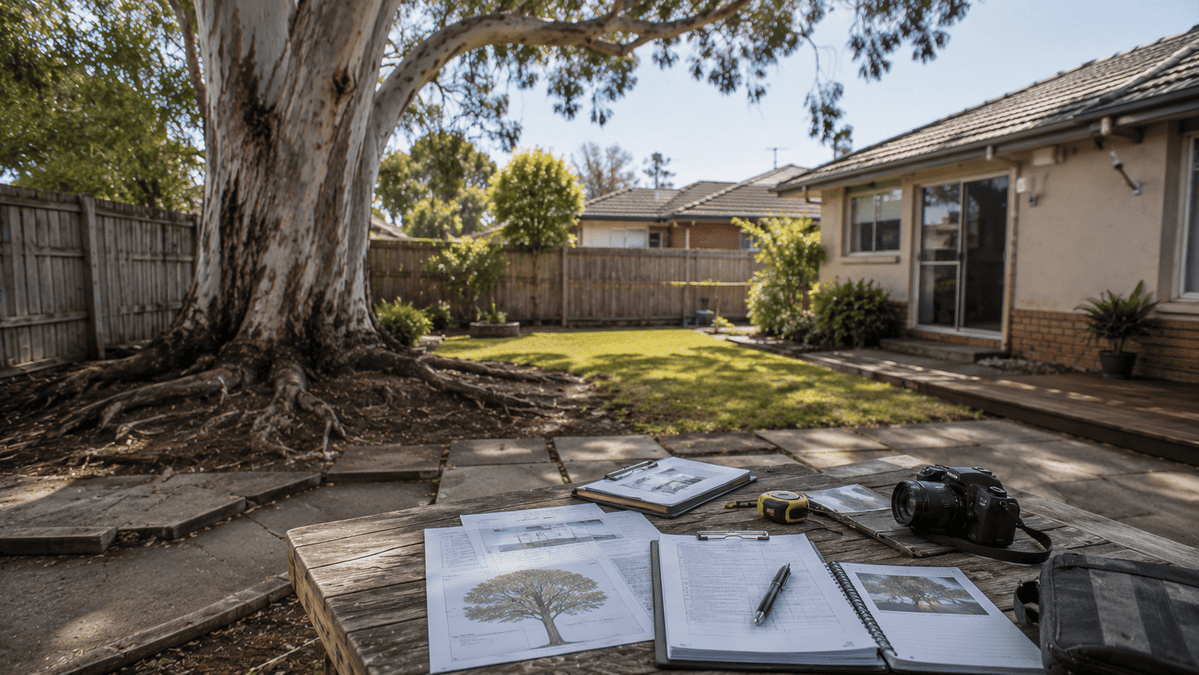
You’re planning a backyard extension, but there’s a large gum tree close to the build area. Council says they need an arborist report before approving the project.
Common Challenges
- Is the tree protected?
- Will the roots affect the foundation?
- Can pruning solve the problem instead of removal?
How to Solve It
Get an early assessment
Don’t wait until council asks. It saves time.
Check local regulations
Every council has different tree protection rules.
Understand the tree’s condition
A healthy tree may need preserving.
Use the report in your application
This strengthens your approval process.
Why It Works
An early arborist assessment removes uncertainty. Instead of guessing, you’re working with facts.
And councils love facts. It’s basically their favourite hobby.
Pro Tip Box
Pro Tip:
If you’re buying a property with large established trees, ask about previous Arborist Reports.
Hidden tree issues can become your problem after settlement.
Like inheriting someone else’s mystery plumbing.
Quick Quiz: Does Your Property Need an Arborist Report?
Answer these:
1. Are you planning to remove a tree?
- Yes
- No
2. Is construction happening within 5 metres of a large tree?
- Yes
- No
3. Has your council issued a notice or request?
- Yes
- No
4. Is the tree showing visible damage, leaning, or decay?
- Yes
- No
Results:
Mostly Yes?
You probably need an Arborist Report.
Mostly No?
You may not need one yet, but it’s still worth checking.
Because prevention is cheaper than fines. Usually by a lot.
Survey: What’s Your Biggest Tree Concern?
Pick one:
- Tree roots damaging foundations
- Council approval delays
- Branches near power lines
- Neighbour complaints
- Storm damage risks
This helps property owners understand they’re not alone. Trees cause more drama than reality TV sometimes.
How to Choose the Right Arborist in Australia
Not all arborists provide formal reports suitable for councils.
When choosing one, look for:
- Relevant qualifications
- Experience with local council applications
- Knowledge of Australian tree species
- Insurance coverage
- Clear written reporting
Ask this simple question:
“Will this report meet my local council’s requirements?”
That one question can save you from paying twice.
A deeply human tradition: paying once for the wrong thing, then again for the right thing.
FAQs About Arborist Reports
How long does an arborist report take?
Usually between a few days and a week, depending on complexity.
Urgent reports may be available faster.
Are arborist reports required for all tree removals?
No. It depends on your local council and the tree itself.
Always check first.
Can I remove a dangerous tree immediately?
In emergencies, councils may allow urgent removal, but evidence is still important.
Photos and an arborist inspection help.
How much do arborist reports cost?
Costs vary based on tree size, location, and complexity.
Simple reports are usually cheaper than dealing with fines.
That’s the sort of maths everyone understands.
Can arborist reports help with insurance claims?
Yes. They can document hazards, storm damage, or tree failure risks.
This can strengthen claims.
What if my neighbour’s tree is causing issues?
An arborist report can help establish the extent of damage or risk and support formal discussions.
Better than arguing over the fence in thongs.
Conclusion
For property owners across Australia, Arborist Reports are more than just paperwork. They’re a practical tool for protecting your property, staying compliant with council regulations, and making informed decisions about tree management.
Whether you’re planning construction, dealing with a dangerous tree, or simply trying to avoid a council headache, getting professional advice early can make all the difference.
Because when it comes to trees, waiting until there’s a problem usually means the roots of that problem have been growing for a while.