

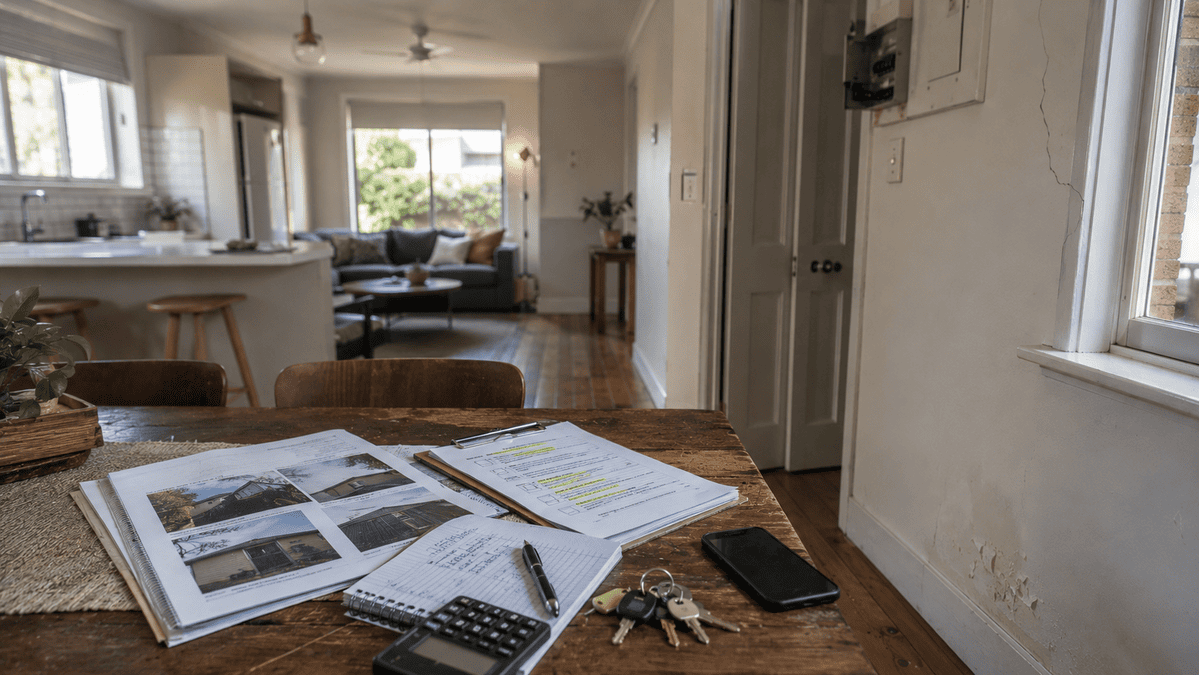
7 Hidden Problems Building Inspection Reports Can Reveal Before You Buy
- June 23, 2026
- by
- thetradieguide@gmail.com
Buying a home in Australia can feel like a dream right up until you discover the “charming character” of the property includes rising damp, cracked foundations, and wiring that looks like it was installed during the invention of electricity.
That’s where Building Inspection Reports become one of the smartest tools in the buying process.
A professional building inspection report helps uncover issues that aren’t obvious during an open home. Fresh paint, styled furniture, and a nice candle burning in the kitchen can distract buyers, because humans are apparently very easy to manipulate by scented wax.
If you’re researching Building Inspection Reports before buying, this guide will walk you through seven hidden problems these reports can reveal and why they matter.
Quick Overview
Before signing a contract, Building Inspection Reports can help uncover:
- Structural movement or foundation issues
- Hidden water damage and moisture problems
- Roof defects and drainage failures
- Electrical hazards
- Pest damage, especially termites
- Poor renovation workmanship
- Plumbing leaks and drainage concerns
These problems can range from minor maintenance to expensive repairs. Spotting them early can save you thousands and give you stronger negotiating power.
Want to dive deeper? Keep reading.
1. Structural Cracks That Mean More Than “Just Settling”
Not every crack is a disaster. Houses move. Soil shifts. Australia’s weather swings between dry spells and heavy rain like it’s emotionally unstable.
But some cracks can point to bigger issues.
A building inspection report may identify:
- Large diagonal cracks around doors and windows
- Uneven floors
- Wall separation
- Foundation movement
Why it matters:
Structural repairs can cost tens of thousands. A crack that looks harmless today might be tomorrow’s “why is my floor sinking?” problem.
Pro Tip:
Hairline cracks are common. Wider cracks or patterns around load-bearing walls deserve serious attention.
2. Moisture Damage Hiding Behind Fresh Paint
Fresh paint can be innocent. It can also be camouflage.
Moisture issues are one of the most common things found in Building Inspection Reports across Australia.
Inspectors often look for:
- Water stains on ceilings
- Damp smells
- Mould growth
- Rising damp in walls
- Poor bathroom waterproofing
A bathroom that looks spotless might be leaking underneath. Like many polished things in life, appearances lie.
Did You Know?
Even a small hidden leak can lead to timber rot, mould, and major repair bills over time.
3. Roof Problems You Can’t See From the Ground
At an open home, buyers rarely climb onto the roof. Probably for legal reasons.
A proper building inspection report can reveal:
- Broken roof tiles
- Rusted metal sheets
- Sagging roof lines
- Poor flashing installation
- Gutter blockages
Roof repairs can be expensive, especially if leaks have already affected insulation or ceiling structures.
Key takeaway:
A roof problem rarely stays “just a roof problem.”
4. Electrical Issues That Could Be Dangerous
Old homes in Australia can have outdated wiring, overloaded switchboards, or DIY electrical work that should never have existed.
A building inspection report may highlight:
- Old ceramic fuses
- Exposed wiring
- Missing safety switches
- Faulty power points
Electrical issues aren’t just costly. They can be dangerous.
“If the wiring looks like spaghetti in the roof cavity, it’s usually not gourmet.”
That’s not an official inspector quote. But it should be.
5. Termite Damage and Pest Activity
Australia and termites have an annoyingly close relationship.
Even if you don’t see visible signs, Building Inspection Reports often reveal:
- Hollow timber
- Mud tunnels
- Soft skirting boards
- Roof timber damage
Termites can destroy structural timber without obvious warning.
Quick Question:
Would you buy a car without checking the engine?
Buying a house without checking for termites is basically the same thing, just much more expensive.
6. Dodgy Renovation Work
Renovated homes can look amazing. But cosmetic upgrades sometimes hide poor workmanship.
Inspectors often find:
- Uneven tiling
- Poor waterproofing
- Misaligned doors
- Cheap patchwork repairs
- Unapproved structural changes
This is especially important in homes flipped quickly for sale.
Bold truth:
A stylish kitchen doesn’t guarantee the walls behind it are behaving.
7. Plumbing Problems Beneath the Surface
Plumbing issues can stay hidden until you’re already living there and suddenly your shower drains like a swamp.
A building inspection report can uncover:
- Low water pressure
- Leaking pipes
- Corroded plumbing
- Poor drainage
- Overflow issues
These might seem small, but repeated leaks can cause major structural damage over time.
Quick Guide: What To Do If a Report Finds Problems
Imagine this:
You’ve found a home you love. Great location, good layout, nice backyard. Then the Building Inspection Report lands in your inbox and suddenly your dream home has “moisture ingress” and “possible movement.”
Fun.
Common Challenges
- Should you walk away immediately?
- Can you negotiate the price down?
- Are the issues fixable or deal-breakers?
How to Solve It
Understand the Severity
Not every issue is major. Separate maintenance from structural concerns.
Get Specialist Advice
If the report mentions roofing, plumbing, or structural concerns, get expert quotes.
Use It for Negotiation
Reports can help justify a lower offer.
Plan Your Budget Properly
Know what repairs might cost before committing.
Why It Works
A report gives you clarity. Instead of buying based on emotion, you’re making decisions based on facts. Strange concept, but effective.
Quick Quiz: How Prepared Are You?
Answer yes or no:
- Do you know the age of the property?
- Have you budgeted for unexpected repairs?
- Do you understand what a building inspection covers?
- Have you checked for termite history?
- Are you prepared to negotiate based on findings?
Results:
4-5 Yes:
You’re well-prepared. Suspiciously competent.
2-3 Yes:
You’re on the right track but may need more research.
0-1 Yes:
Please don’t buy a house this weekend.
FAQ About Building Inspection Reports
Are Building Inspection Reports worth the money?
Absolutely.
Paying a few hundred dollars now can save you thousands later.
Think of it as paying for bad news before it becomes your expensive reality.
Do Building Inspection Reports include pest inspections?
Not always.
Some inspectors include it, but often pest inspections are separate.
Always ask before booking.
Can I use a Building Inspection Report to negotiate?
Yes.
Sellers may agree to lower the price or fix issues before settlement.
It gives you leverage based on evidence.
How long does a building inspection take?
Usually between 1 to 3 hours depending on the property size.
Larger or older homes often take longer.
Because older houses love secrets.
What if the report finds major structural issues?
You may choose to:
- Renegotiate
- Request repairs
- Walk away
It depends on your risk tolerance and repair budget.
Are Building Inspection Reports common in Australia?
Very common, especially for buyers wanting peace of mind.
They’re one of the smartest parts of due diligence.
Conclusion
Buying property is one of the biggest financial decisions most Australians will ever make. And while a home might look perfect on the surface, hidden issues can quickly turn excitement into regret. That’s why Building Inspection Reports are so valuable.
They help you uncover structural, moisture, pest, electrical, and plumbing problems before they become your responsibility. More importantly, they give you clarity, confidence, and negotiating power.
Before you buy, get the facts. Because “it looked fine at the inspection” is not the kind of sentence you want to repeat while paying for foundation repairs.
You may also Like