




How to Build a Consistent Strength Training Habit at Home
- November 05, 2026
- by
- thetradieguide@gmail.com
A workout saved on your phone still needs a place in your week. Before adding more exercises, decide when you will start, where you will train and what you will do when time is short.
You can make strength training at home easier to repeat by settling those decisions before your next session. A familiar routine gives you somewhere to begin on an ordinary Tuesday, without searching for another video or waiting for an uninterrupted hour.
Choose two times you can usually protect
Look at a normal week before choosing your training days. If evenings regularly run late, a plan built around evening workouts will be difficult to follow. Pick times with fewer competing demands, even if they are less appealing on paper.
Australia’s movement recommendations for adults include muscle-strengthening activities on two or more days each week. This sits alongside other movement, including aerobic activity; two strength sessions do not cover every part of staying active.
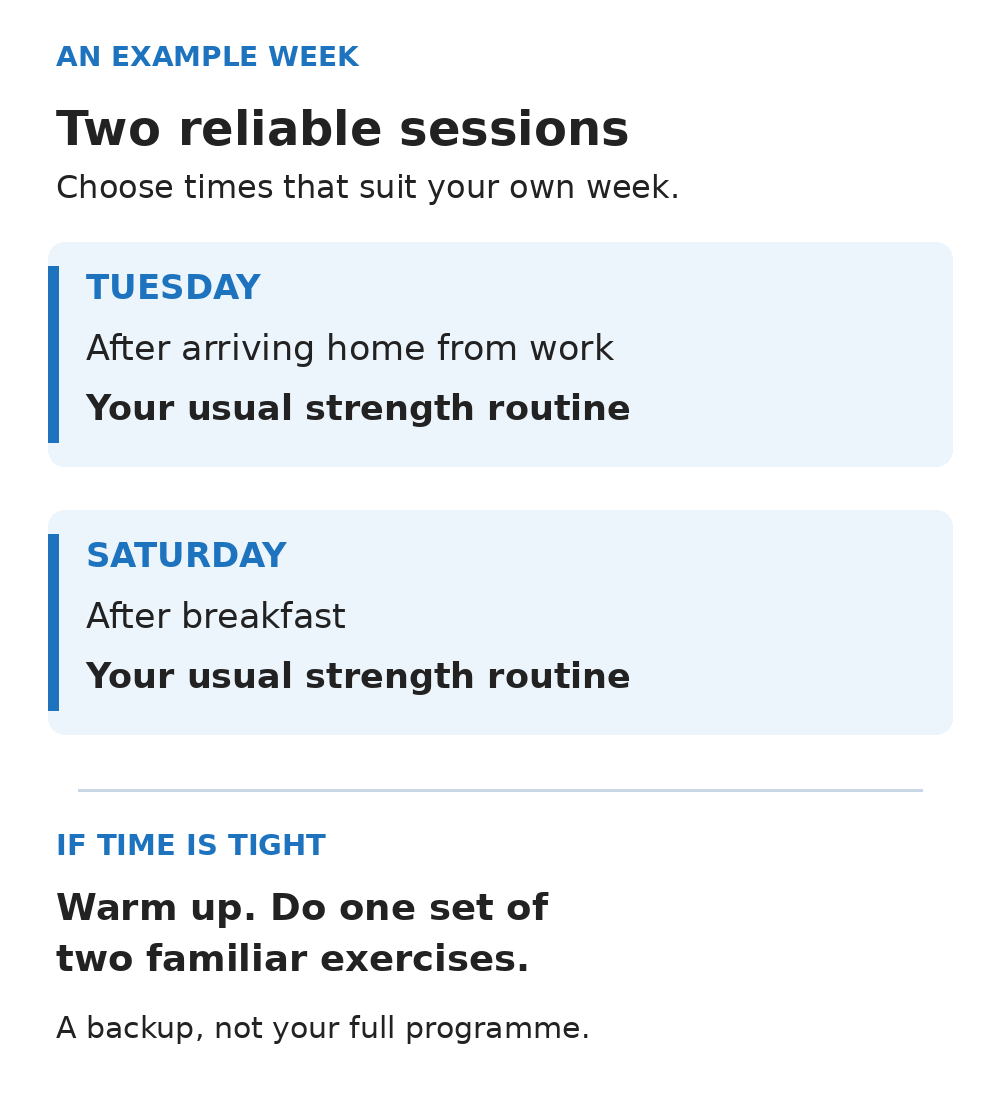
For a beginner doing whole-body sessions, leave roughly 48 hours before training the same muscles again. Tuesday and Saturday could work, for example. If those days do not suit your roster, choose a different pair.
Give each session a clear starting point: “After I arrive home on Tuesday, I change into my exercise clothes and begin.” Then write down a backup time. Avoid a vague promise to fit it in later.
Make the first few minutes straightforward
Choose a spot where you can move comfortably without shifting half the room. Check for slippery flooring, loose rugs, low furniture and enough space around your arms and legs. Keep pets and children clear while equipment is in use.
Store what you need nearby, safely out of walkways. A mat and a small amount of suitable equipment may be enough, depending on your routine. Bodyweight exercises can also provide resistance, so you do not need to build a home gym before starting.
Leave your exercise list somewhere easy to find. If you use a video, save the specific session beforehand and turn off unrelated notifications. That removes one more decision from the start of the workout.

Repeat a suitable routine long enough to learn it
Changing workouts every session adds new instructions to learn. Start with a manageable routine that suits your ability, and repeat it while you become comfortable with the movements.
A balanced programme should cover the main muscle groups. Depending on what is suitable for you, it might include movements such as:
- Sitting down and standing up: a chair sit-to-stand or squat variation for your legs.
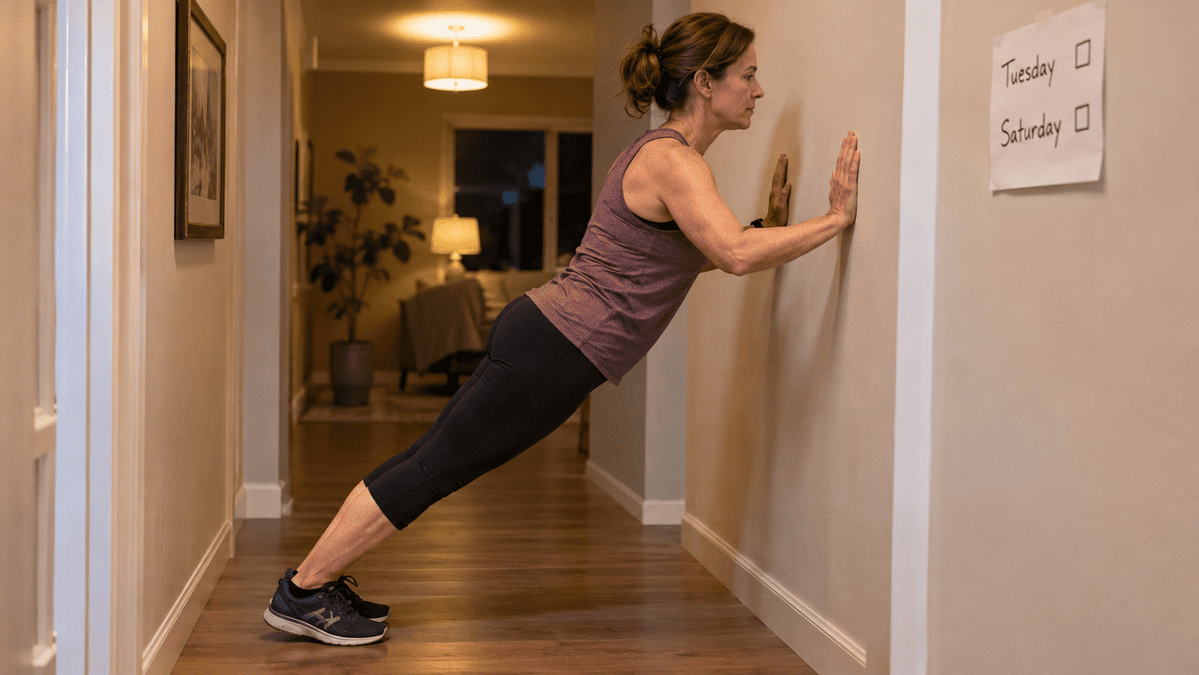
- Pushing: a wall push-up or another suitable pushing exercise.
- Pulling: a row using equipment you know how to handle.
- Working your hips: a bridge or another suitable hip exercise.
- Working your abdomen and back: an appropriate exercise to strengthen the muscles around your middle.
These are examples to help you understand the range of movements, rather than a personalised workout. A physiotherapist, accredited exercise physiologist or qualified trainer can help you choose appropriate versions and check your technique. The NHS strength exercise guide also has illustrated instructions for chair sit-to-stands and wall push-ups.
For a new exercise, one set may be enough to begin learning it. A repetition, or rep, is one complete movement; a set is a group of repetitions. The Better Health Channel’s beginner guidance describes starting with one set and gradually building towards two or three sets of eight to 12 repetitions.
Use that as general guidance rather than a number to force yourself to reach. Keep movements controlled, rest between sets and choose resistance that lets you maintain your technique.
Decide on your shorter session in advance
Some days, the time you set aside will disappear. Have a small backup ready: warm up, then do one set of two familiar, suitable exercises. Finish there if that is all you can manage.
This shorter version can help you keep returning to the routine. It does not work every muscle group or automatically replace a balanced strength programme. If you use it most weeks, review your usual session length or timing.
What if I only have a few minutes?
Use the time to prepare your space or review an exercise you have already been taught. Do not skip your warm-up or rush through movements to record a completed workout. If you cannot exercise safely in the available time, use your backup time instead.
A short session is an option for limited time, not a reason to train through illness, pain or exhaustion. Rest or seek advice when that is what you need.
Change the part of the plan that keeps failing
When you miss a session, identify what got in the way. “I need more motivation” gives you little to change. “Dinner preparation starts at the same time as my workout” points to a practical problem.
If setting up takes too long, simplify the equipment. If a movement feels confusing, get it checked or use an appropriate alternative you understand. If the session regularly runs over, reduce its length rather than repeatedly starting a workout you cannot finish.
For example, someone who keeps missing Thursday evenings could move that session to Saturday morning and keep Tuesday unchanged. Try the revised arrangement before changing everything else.
Use reminders, a calendar or a training partner if they help you begin. You do not need a particular app, daily streak or public commitment for the plan to be useful.
Keep a small record of attendance and effort
After each session, note the date, exercises, sets, repetitions and any weights used. Add a few words about how it felt. This separates two useful questions: are you making time to train, and is the training becoming more manageable?
Example note: Tuesday — usual routine completed; wall push-ups felt controlled; used the same weights as last time.
Review the notes after a couple of weeks. Look for patterns in missed sessions, exercises that need help and movements that are becoming easier. Choose one adjustment, rather than treating every workout as a test.
Build the challenge gradually
Once you can repeat your routine comfortably with good technique, consider a small increase. That might mean adding a repetition, another set or a little resistance. Change one thing at a time so you can judge how you respond.
Start each session with a warm-up, such as several minutes of easy movement followed by gentle practice of the exercises. Breathe normally while you train and avoid rushing to finish.
Healthdirect’s strength training advice recommends learning correct technique, building up slowly and avoiding exercises that cause pain. Get professional advice before starting, especially if you have a health condition, an injury, concerns about balance or are returning after a long break.
After a missed workout, return to the next workable session
Missing Tuesday does not mean the rest of the week is lost. Use your backup time if it still allows recovery, or return at the next planned session. Avoid cramming several demanding workouts together to make up for it.
After illness or a longer break, restart with a manageable amount and rebuild as needed. Seek advice if symptoms persist or you are unsure what is appropriate.
Before your next workout, settle three things: the starting time, the exercises and the shorter backup. A consistent home routine grows from a plan you can return to, then adjust as your strength and circumstances change.
General information for adults; individual exercise needs vary. This article does not replace a personalised assessment or exercise programme.
You may also Like

What Happens During Dental Implant Treatment? A Step-by-Step Guide