




Does Trigger Point Therapy Have to Hurt? Understanding Pressure and Comfort
- November 06, 2026
- by
- thetradieguide@gmail.com
You do not have to grit your teeth through trigger point therapy. Pressure on a tender area can feel uncomfortable, but severe pain is a reason to speak up and have the treatment changed or stopped. Mayo Clinic’s massage guidance makes that distinction clear: a sensitive spot may feel uncomfortable during treatment, but massage should not cause severe pain. [source]
The word “firm” can also mean different things to different people. Before a session starts, it helps to explain what you are comfortable with and agree on how you will ask for an adjustment.
Why a tender spot can feel uncomfortable
A trigger point is commonly described as a particularly sensitive spot within a tight band of muscle. In hands-on treatment, a practitioner may apply slow, controlled pressure to that area. Pressing an already sensitive spot can reproduce discomfort. [source]
People often call these areas “muscle knots”. That familiar label can help describe where something feels tight, but it does not explain every cause of pain. A sore shoulder, for example, needs more consideration than simply finding the most tender spot and pressing harder.
Trigger point treatment is also not one standardised procedure with a single required pressure or duration. A clinical review in American Family Physician describes several treatment approaches and notes that no standardised treatment protocol has been established. The approach should therefore be explained rather than presented as a fixed routine everyone must tolerate. [source]
Describe what you feel, then say what you need
“Is that pressure OK?” can be surprisingly difficult to answer. You may feel tenderness without knowing whether it is expected, or worry that asking for less pressure will interrupt the session.
You can give a clearer answer by separating two things: what the sensation feels like and what you want the therapist to do.
For example:
- “That feels like a dull ache, but I’m comfortable continuing.”
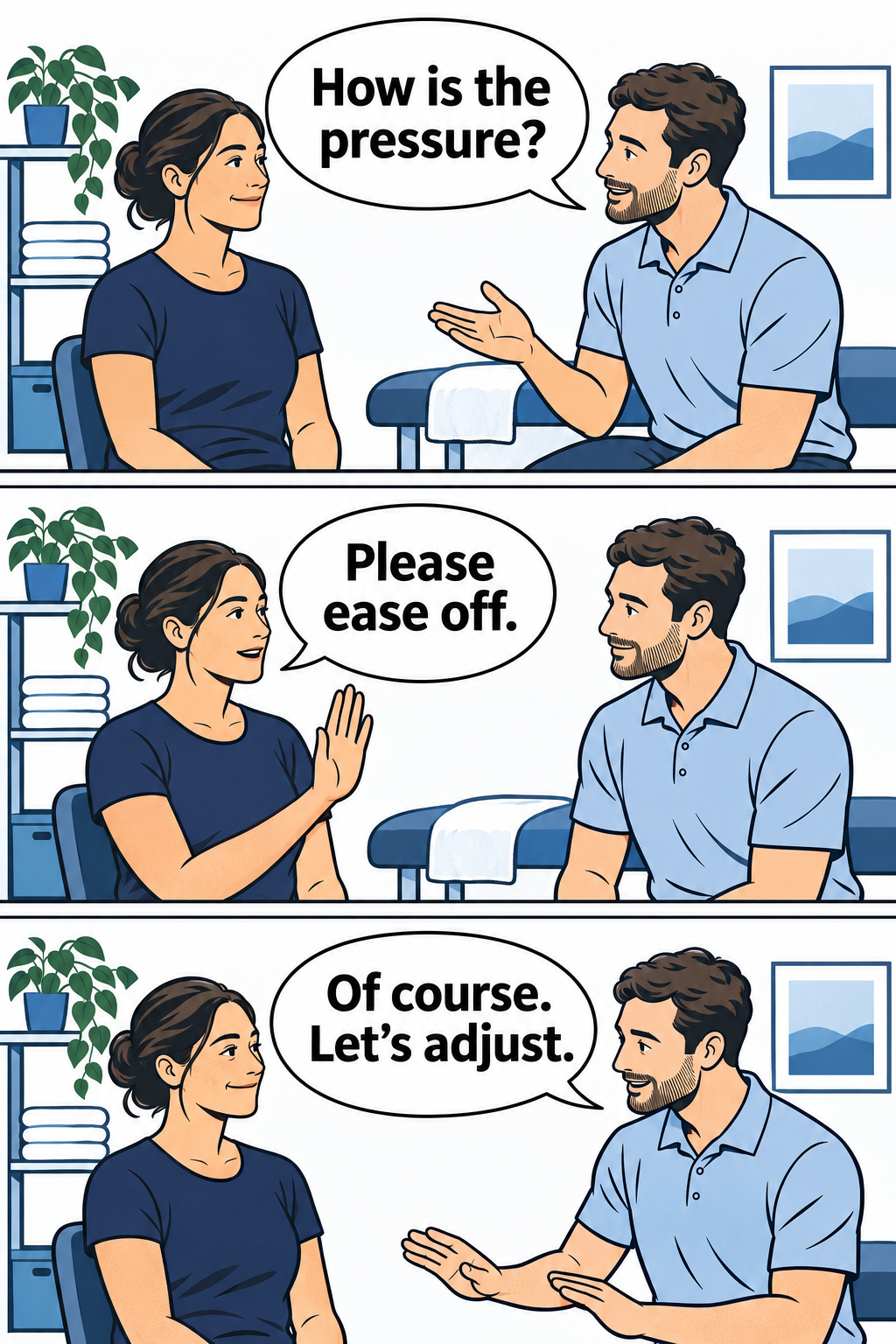
- “The pressure is getting too strong. Please ease off.”
- “That feels sharp. Please stop working there.”
- “I’d like a break before we continue.”
These are examples of useful wording, not a way to diagnose what is happening. You do not need to identify the cause before asking for a change.
Healthdirect’s remedial massage guidance advises telling the therapist when you feel uncomfortable so they can adjust their technique. You can also ask them to check in more often if you are unsure how to raise it yourself. [source]
A pain score is a conversation tool
If a therapist asks you to rate discomfort from zero to 10, use the number to describe your experience. Add a few words so the number has meaning: “About four, and getting stronger,” is more informative than “Four.”
Avoid treating a suggested score as something you must reach. If someone asks for a particular level of discomfort, you can still say that you would prefer lighter pressure.
A useful question is:
“Can we start more gently and adjust once I know how it feels?”
You can also change your mind. Agreeing to firm pressure at the beginning does not mean you have agreed to the same pressure everywhere or for the entire appointment.
The score should help you communicate, not turn the session into a test of endurance.
Discuss the approach before treatment begins
Before booking, ask what the practitioner means by trigger point therapy. Clarify whether the appointment involves hands-on massage, whether other techniques might be proposed, and how they respond when treatment feels uncomfortable.
For example, Christopher’s Remedial Massage describes its Trigger Point Therapy service as beginning with assessment and tailoring treatment to the person, the area involved and their comfort. That gives a prospective client specific points to discuss before proceeding.
Useful questions include:
- What training and experience do you have with this type of treatment?
- How will you decide whether it suits my symptoms?
- What can we change if direct pressure feels uncomfortable?
- How will we review whether the treatment is helping?
Share relevant health information as well. Mayo Clinic advises discussing conditions such as bleeding disorders, blood-thinning medication, recent blood clots, fractures and severe osteoporosis before massage. Pregnancy, recent surgery and other health concerns may also affect what is appropriate. If you are uncertain, speak with your treating healthcare professional first. [source]

Soreness afterwards is not the goal
Soreness and bruising are possible side effects of remedial massage. Their presence does not, by itself, show that the treatment has helped. Healthdirect also notes that massage can sometimes make pain worse. [source]
Before leaving, ask what response the therapist expects and what should prompt you to contact them or seek medical advice. Avoid relying on a blanket explanation that any discomfort afterwards is normal.
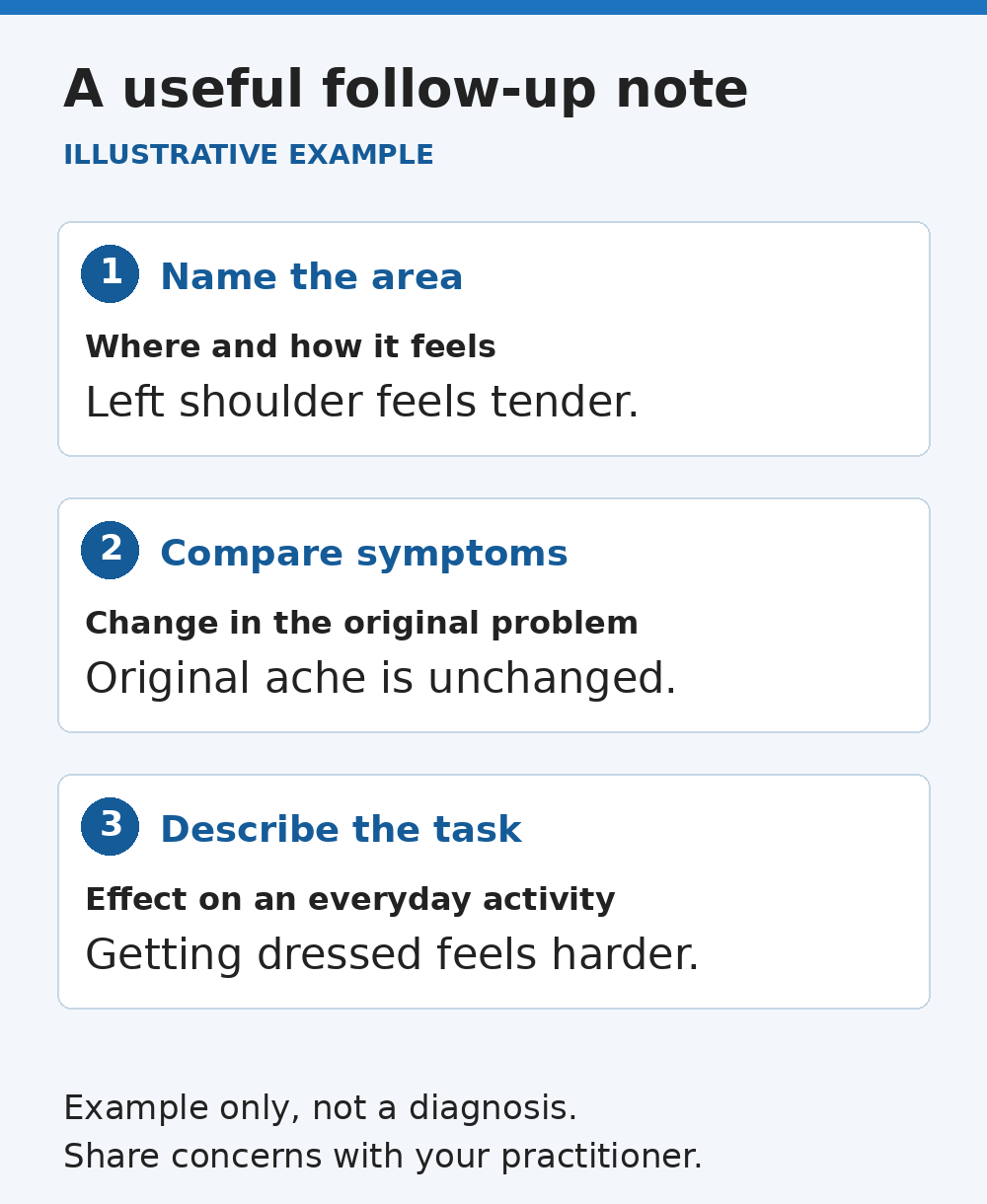
A brief note can make follow-up more useful. Record where you feel sore, whether the original problem has changed and whether ordinary activities feel easier or harder. “My shoulder was more uncomfortable when getting dressed” gives the practitioner more information than “I felt sore.”
If pain is worsening, remains concerning or comes with new symptoms, seek assessment rather than assuming another forceful session is the answer. The US National Center for Complementary and Integrative Health advises against using massage to delay medical care for a health problem. [source]
Agree on what improvement would look like
Choose a practical goal before treatment: turning your head more comfortably, sitting through a meeting or returning to an appropriate activity. These examples help frame a discussion; they are not promised outcomes.
Afterwards, review that goal alongside any unwanted effects. A session can feel intense without producing the change you wanted. Equally, asking for gentler treatment should not be treated as a failure to cooperate.
Keep expectations realistic. Research suggests massage may offer short-term relief for some neck and shoulder pain, but that does not establish lasting benefit or prove that a particular technique will suit everyone. [source]
If exercise forms part of your agreed care plan, this guide to building a consistent strength training habit at home offers practical ideas for organising a routine. Exercise selection and timing still need to suit your circumstances.
You can ask for a different approach
Trigger point therapy may involve tenderness, but you do not need to accept severe pain to take treatment seriously. Start with a clear discussion, describe changes as they happen and ask for adjustments when needed.
The most useful follow-up question is whether the treatment helped with the problem you came in with. If it repeatedly leaves you worse, or progress remains unclear, review the approach with the practitioner and seek further assessment where appropriate.
General information only. Suitability for massage depends on your symptoms and health history.
You may also Like
What Happens During Dental Implant Treatment? A Step-by-Step Guide

What Is an LED Light Facial and What Happens During Your First Session?