





What Do Commercial Lawyers Do? A Practical Guide for Australian Business Owners
- November 09, 2026
- by
- thetradieguide@gmail.com
A supplier’s price may look reasonable while the contract leaves you responsible for costs you have not considered. A new business partnership may have a clear ownership split but no agreed way to handle an exit. These are the kinds of details a commercial lawyer helps business owners work through.
Commercial lawyers advise on the legal side of running and growing a business. Their work can include preparing agreements, explaining obligations, negotiating transactions and helping resolve disputes. The useful result is a clearer understanding of what you are agreeing to, where the risks sit and what options you have.
Quick Overview
- Commercial lawyers help with business agreements, ownership arrangements, transactions and disputes.
- A contract review should explain the practical effect of important terms and identify changes worth discussing.
- The right lawyer depends on your particular matter, industry and relevant state or territory.
- Before engaging a firm, agree on the work, expected fees, timing and who will handle it.
Where a commercial lawyer fits into your business
The job usually starts with a business decision: accepting a large customer contract, taking on premises, buying a business or resolving an unpaid account. A lawyer connects that decision with its legal consequences.
Their role can overlap with corporate, property, employment and intellectual property law. However, the label “commercial lawyer” does not mean every practitioner handles every area. Ask about experience with your specific matter and whether another specialist needs to be involved.
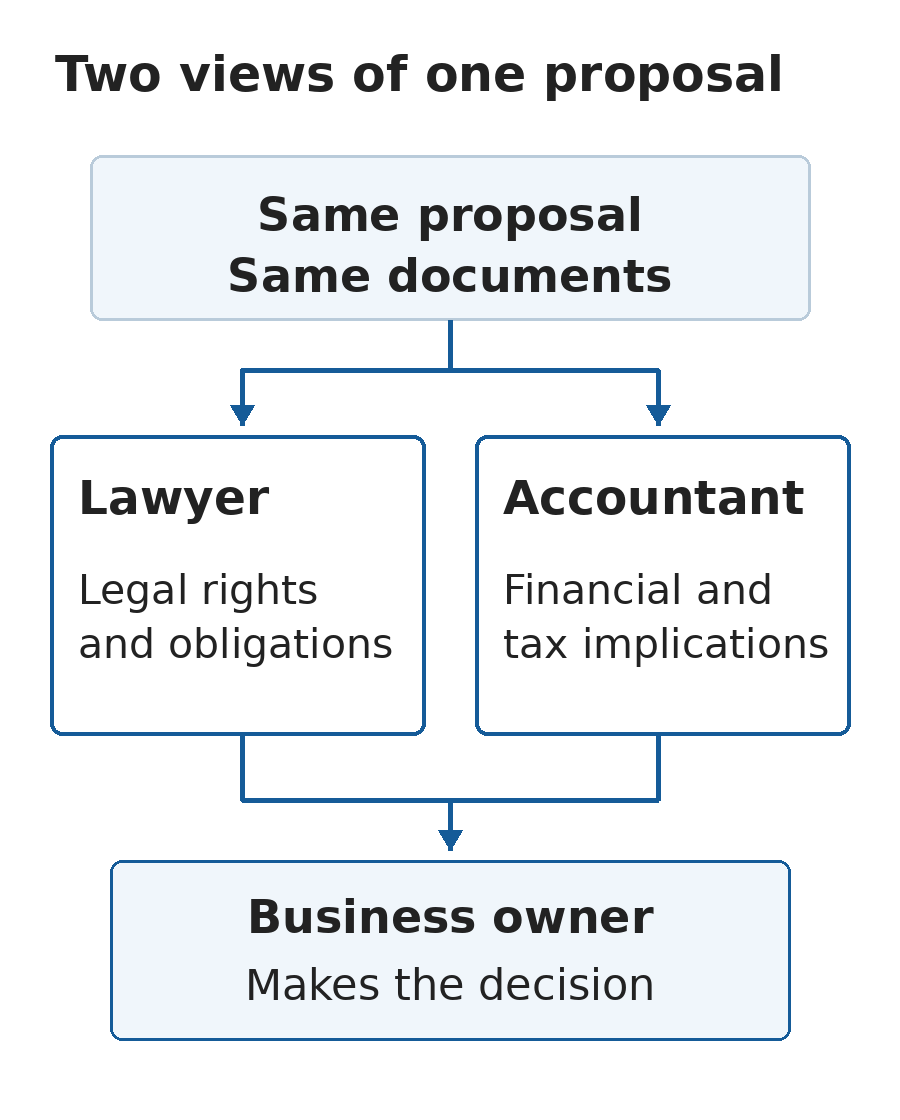
Your accountant may assess the financial and tax implications of a proposal while your lawyer examines the legal rights and obligations. For decisions involving both, ask the advisers to work from the same documents and proposed arrangement.
The work they commonly handle
Contracts with customers, suppliers and contractors
A lawyer can draft a new agreement or review one supplied by another party. The discussion may cover the work being promised, payment, changes, confidentiality, responsibility for losses and how the arrangement ends.
Written paperwork is not the only way an agreement can become binding. The ACCC’s guidance on contracts explains that acceptance can also occur verbally or through actions, such as clicking “I agree”. Do not assume you can leave legal questions until a formal signature stage.
Standard form contracts also need attention. These are generally pre-written agreements offered with little meaningful opportunity to negotiate. Unfair contract terms protections can apply to eligible small businesses, and the assessment depends on the term and the contract as a whole. An unfavourable clause is not automatically unlawful.
Ownership and decision-making
When people run a business together, their agreement needs to address more than percentages. A lawyer can help document who contributes what, how decisions are made, how disagreements are handled and what happens when someone wants to leave.
For example, two owners might agree to equal shares but have different expectations about working hours or additional funding. Discussing those expectations gives the lawyer something concrete to address in the documents.
Buying or selling a business
A transaction can involve assets, leases, supplier agreements, licences and other obligations. The legal work depends on what is being bought or sold and how the deal is structured.
Business.gov.au’s guide to buying an existing business recommends checking financial records, operations and legal documents before signing. This checking process is called due diligence. A lawyer can help investigate the legal documents, identify required consents and negotiate contract conditions, alongside financial checks by an accountant or other adviser.
Disputes and unpaid accounts
A lawyer can assess the agreement, correspondence and available evidence, then explain possible responses. These might include negotiation, a formal demand, mediation or court proceedings.
Mediation involves an independent person helping the parties try to reach an agreement. It does not guarantee a settlement. Government guidance on preventing and resolving business disputes encourages businesses to consider their options before going to court.
The amount in dispute matters, but so do recovery prospects, legal costs, time and the future business relationship.
What a contract review looks like in practice
Consider this hypothetical example: a small design studio receives a customer agreement for an ongoing project. The studio understands the monthly fee, but the document leaves revisions open-ended and gives the customer broad rights to end the arrangement.
The studio asks a lawyer to review the agreement before accepting it.
| Business question | What the review could examine |
|---|---|
| What does the monthly fee cover? | Deliverables, revision limits and how extra work is approved |
| When can either party leave? | Notice requirements, termination rights and outstanding payments |
| Who can use the finished work? | Ownership, permitted use and any transfer conditions |
| What happens if something goes wrong? | Liability terms, dispute procedures and relevant legal requirements |
The lawyer might explain the important terms, mark up proposed changes and help negotiate them. Confirm which of these tasks is included in the fee.
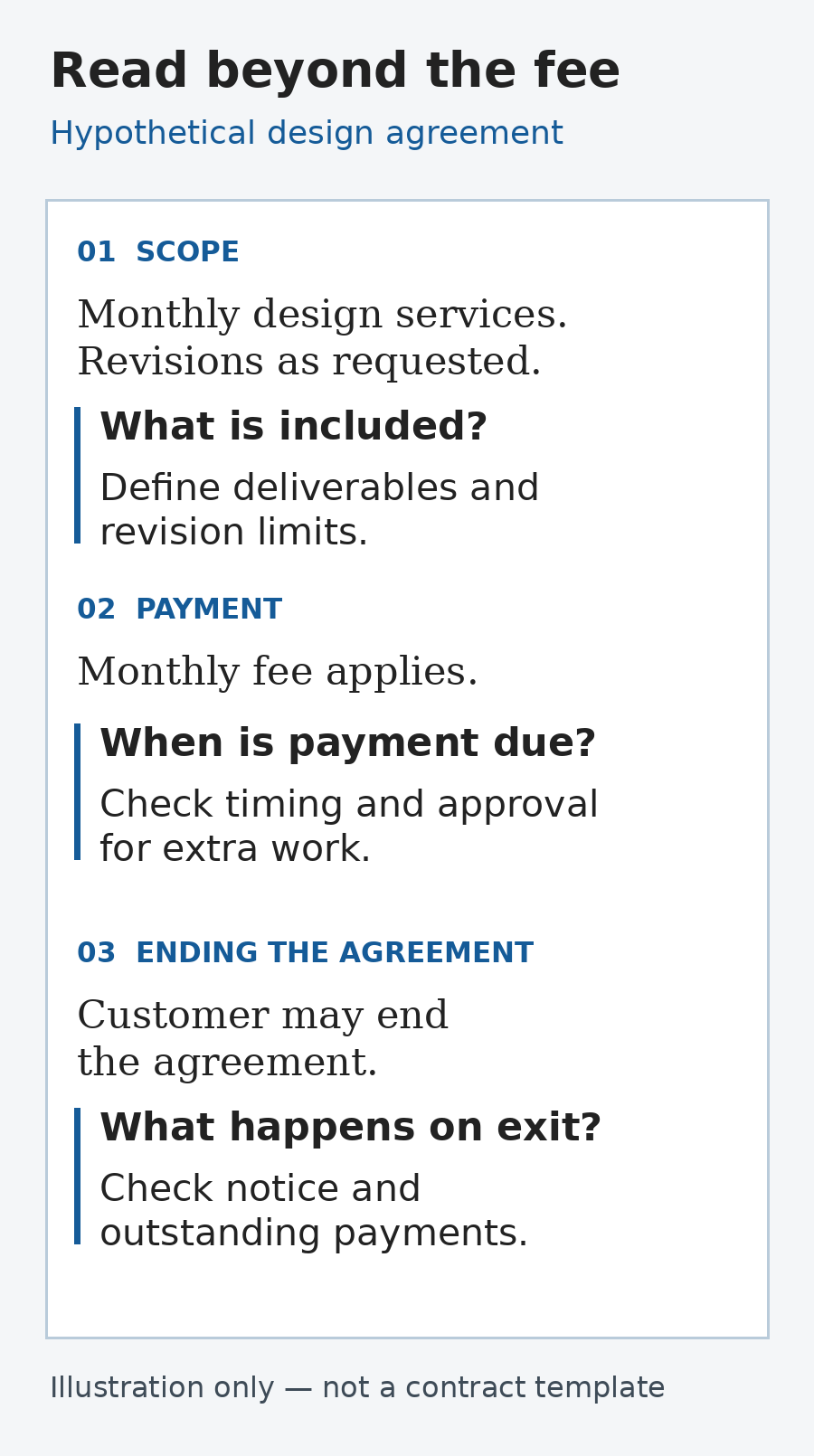
The studio still decides whether the work makes commercial sense. The review helps it make that decision with a better understanding of the agreement; it cannot remove every risk or guarantee the customer will accept changes.
When is it worth getting advice?
Seek advice while there is still time to consider it. Useful points include before accepting a significant contract, signing a lease, providing a personal guarantee, changing ownership or committing to a business purchase.
If a disagreement has already started, explain any response dates at the first enquiry. Preserve the agreement, emails, invoices and other relevant records. Ask about the consequences before withholding payment, stopping work or ending the contract.
For related situations to review within your own business, see our article on common business legal mistakes.
How to choose suitable legal support
Describe the actual task when contacting a firm. “Review a supplier agreement before Friday” gives a clearer starting point than “I need business legal help”. Include the industry, relevant location, other parties and what you hope to achieve.
For example, Nakat Law’s commercial lawyers list contracts and business acquisitions among their services, alongside related corporate and property work. Ask which lawyer would handle your particular matter and whether their experience matches the transaction or dispute involved.
A useful first discussion should leave you understanding the proposed approach, information needed and next step. Tell the firm whether your priority is securing payment, preserving a relationship, completing a purchase or understanding an obligation.
Agree on the scope and fees
Legal fees depend on the work and complexity. A fixed-fee review and open-ended negotiations can cover very different amounts of work, even when they concern the same contract.
Ask for written confirmation of:
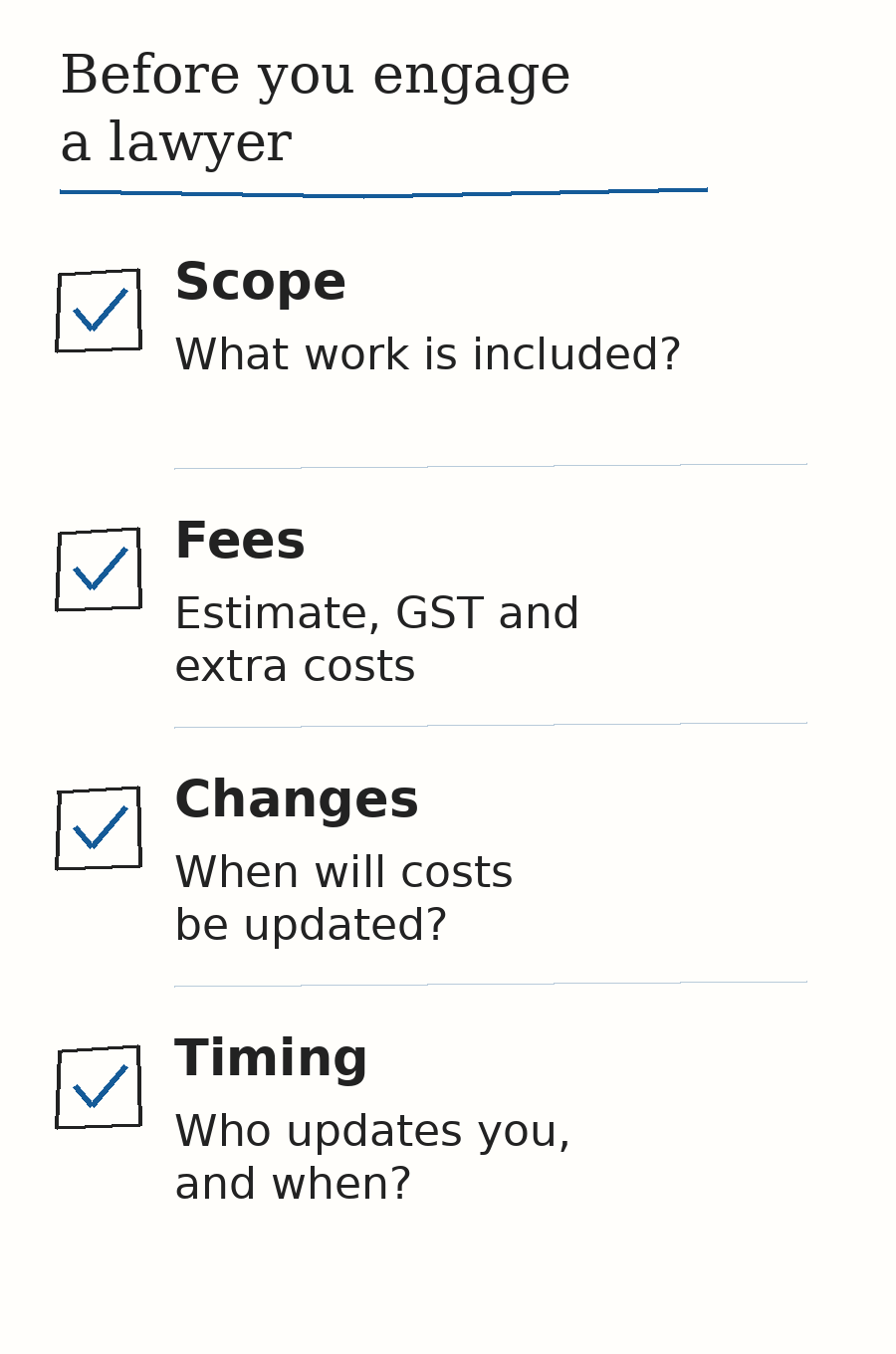
- the documents and issues the lawyer will review
- whether advice, drafting and negotiations are included
- the fee or estimate, GST and additional expenses
- what could increase the cost and when you will be told
- expected timing and who will keep you updated.
Additional expenses, sometimes called disbursements, can include items such as search fees or court filing fees. The Victorian legal regulator’s guidance on getting legal costs in writing explains costs disclosures and agreements. Requirements and exceptions depend on the applicable rules and client circumstances.
Prepare a short timeline and send the current documents before the appointment using the firm’s preferred secure method. Mark your main questions clearly and tell the lawyer about any earlier promises or changes that are missing from the paperwork.
Start with the decision you need to make
Commercial legal advice is most useful when it addresses a specific decision. Choose the agreement, transaction or unresolved issue you need help with, gather the relevant records and explain the outcome you want.
Before authorising work, confirm what the lawyer will do, what it is expected to cost and when you can expect advice. You should then be better placed to understand your options and decide how to proceed.
This article provides general information. Legal requirements vary by matter and jurisdiction; obtain advice suited to your circumstances.
You may also Like

Dispute Resolution in Australia: A Practical Guide for Businesses

International Estate Planning for Australians: What You Need to Know