



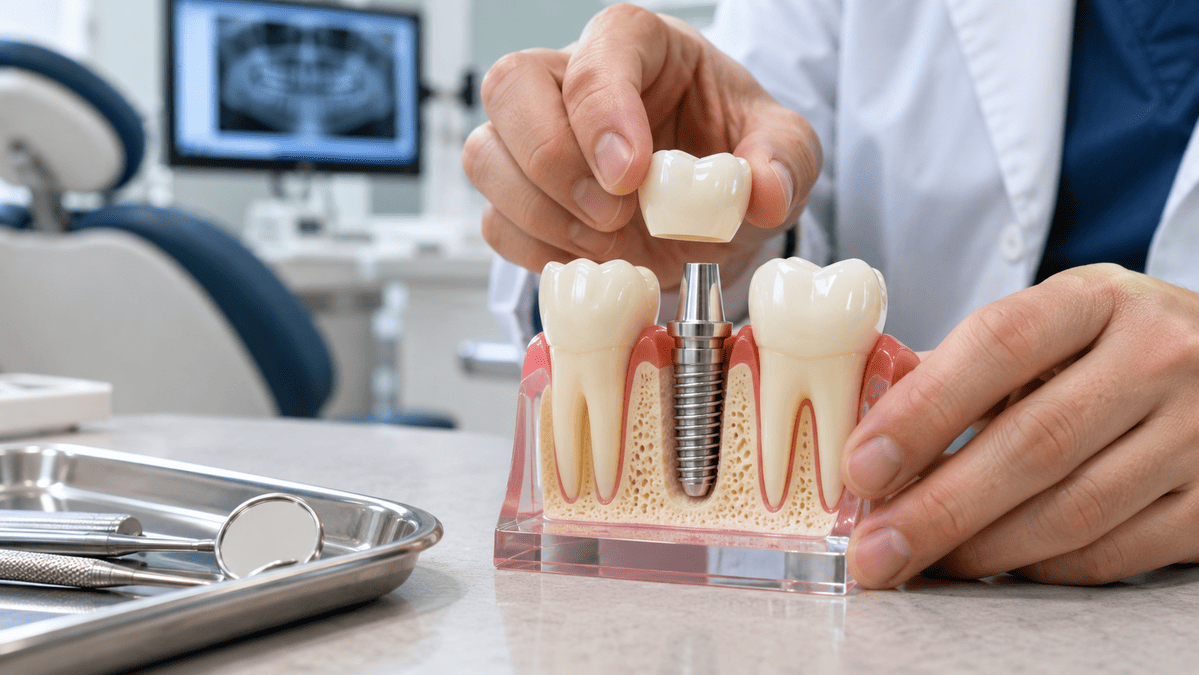
What Happens During Dental Implant Treatment? A Step-by-Step Guide
- November 26, 2026
- by
- thetradieguide@gmail.com
Replacing a missing tooth with a dental implant involves more than fitting an artificial tooth into an empty space. There is the initial assessment, the preparation of your mouth, the surgical appointment and, importantly, the time your body needs to heal.
For someone considering treatment, the waiting periods between appointments can be just as unfamiliar as the procedure itself. You might wonder whether you will be without a tooth for several months, how uncomfortable the surgery will be or when you can return to eating normally.
Understanding each stage can help you prepare for treatment, ask more useful questions and make an informed decision about replacing missing teeth.
Understanding the three parts of a dental implant
Although a dental implant is often described as a replacement tooth, a typical single-tooth implant restoration consists of three components.
| Component | Purpose |
|---|---|
| Implant fixture | An artificial tooth root positioned within the jawbone, commonly made from titanium. |
| Abutment | A connecting component that supports the replacement tooth. |
| Dental crown | The visible artificial tooth designed to fit alongside your natural teeth. |
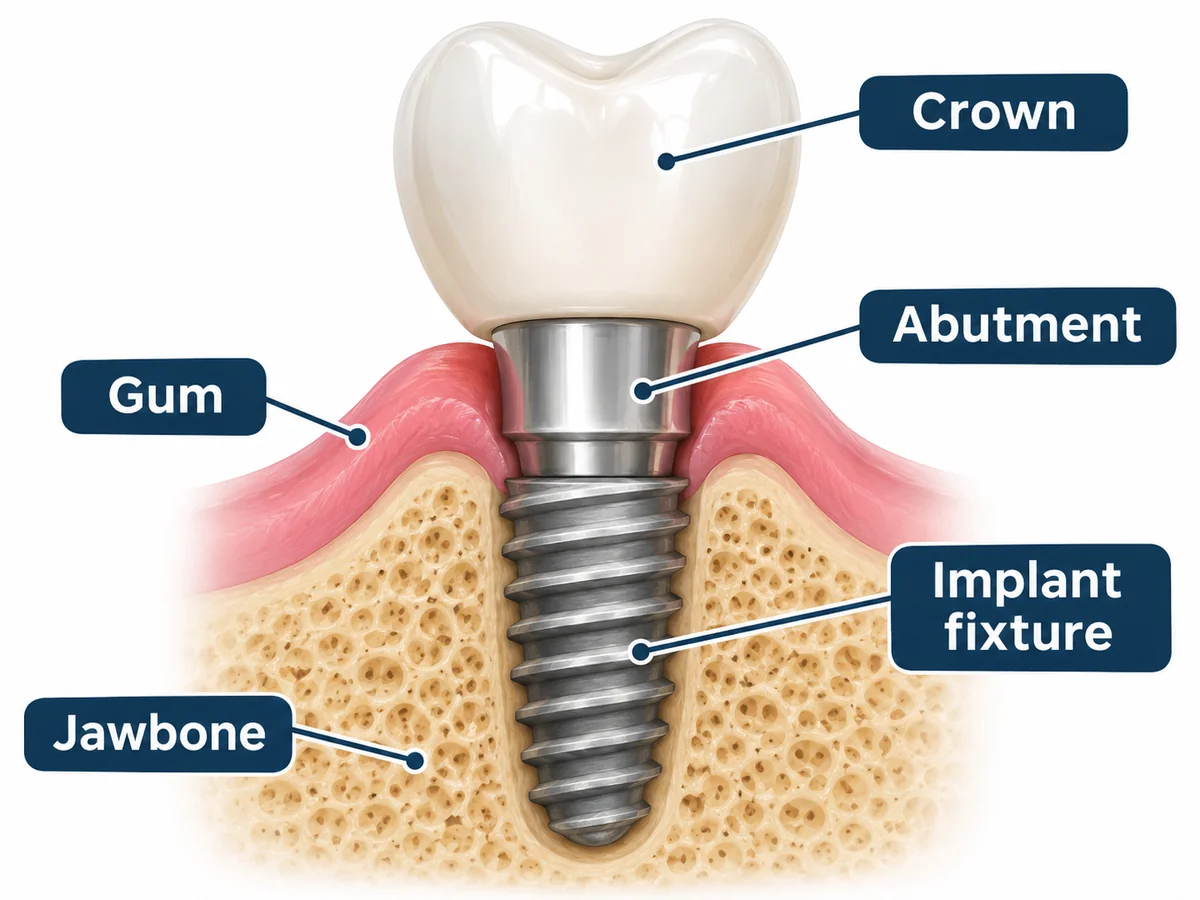
Implants can also support dental bridges or dentures when several teeth need replacing.
The treatment process depends on the number of missing teeth, the condition of your jawbone and your general oral health.
Step 1: Your initial dental consultation
The first appointment is about determining whether implant treatment is appropriate for you.
Your dentist will examine your mouth, review your medical history and assess the condition of your remaining teeth and gums. Dental X-rays and, where necessary, three-dimensional imaging may help identify the available bone and nearby anatomical structures.

This is also an opportunity to discuss:
- How long your tooth has been missing.
- Any medical conditions or medications.
- Previous dental treatments.
- Smoking habits and other factors that may affect healing.
- Alternative tooth replacement options.
- Estimated treatment costs and timeframes.
People considering dental implants can use this consultation to understand whether a single implant, implant-supported bridge or another restorative option may suit their circumstances.
Not everyone will be ready for implant surgery immediately. Existing dental problems may need attention before treatment can begin.
Step 2: Preparing your mouth for treatment
Some patients have sufficient healthy jawbone and gum tissue to proceed with implant placement. Others require additional treatment first.
When a tooth needs to be removed
If a damaged tooth cannot be saved, it may need to be extracted.
Depending on the condition of the extraction site, an implant may be placed during the same appointment or after a period of healing.
When there is insufficient jawbone
Bone can gradually diminish after tooth loss. If there is insufficient bone to support an implant, a dentist may recommend bone grafting.
This procedure adds bone or bone graft material to the treatment area. Depending on the circumstances, grafting may be performed alongside implant placement or as a separate procedure.
When gum disease is present
Active gum disease may need to be managed before implant surgery. Healthy surrounding tissues are important for the long-term maintenance of an implant.
These preparatory treatments can extend the overall timeframe, but they may be necessary to establish suitable conditions for implant placement.
Step 3: The dental implant surgery appointment
Once the treatment area is ready, the implant fixture is surgically positioned within the jawbone.
Local anaesthetic is commonly used to numb the area. Other options for managing anxiety and discomfort may be discussed beforehand.
The dental professional prepares the implant site, positions the fixture and closes or manages the surrounding gum tissue according to the surgical approach.
A small healing component may be visible above the gum, or the implant may remain covered while healing takes place.
You will receive instructions about managing discomfort, eating, cleaning your mouth and attending follow-up appointments before leaving the clinic.
Implant surgery carries risks, including infection, injury to nearby structures and failure of the implant to integrate with the bone. Your dental professional should explain the risks relevant to your individual treatment.
Step 4: Recovery during the first few days
After the anaesthetic wears off, some tenderness, swelling or bruising may develop around the treatment area.
Your dentist may recommend temporary changes to your normal routine, such as:
- Choosing soft foods that require minimal chewing.
- Avoiding pressure on the surgical area.
- Following specific oral hygiene instructions.
- Using recommended pain relief as directed.
- Avoiding strenuous activity for the period advised by your dentist.
- Avoiding smoking during recovery.
Recovery experiences vary. Contact your dental professional if pain or swelling becomes worse, bleeding persists, or you develop a fever or other signs of infection.
Difficulty breathing or swallowing requires immediate emergency medical attention.
Step 5: Allowing the implant to integrate with the jawbone
This is the stage that accounts for much of the overall treatment duration.
While the gum may appear to have healed relatively quickly, the bone underneath needs considerably more time.
The biological process through which bone grows around and integrates with the implant is known as osseointegration. It helps establish a stable foundation for the replacement tooth.
According to Healthdirect Australia, bone integration commonly takes approximately three months, although individual healing periods vary.
During this time, your dentist may arrange appointments to monitor healing and assess implant stability.
Feeling comfortable does not necessarily mean the implant is ready to support a permanent crown. Your dentist will determine when treatment can safely progress.
Will you have a missing tooth during the healing period?
One of the practical concerns for many patients is whether they will have a visible gap while waiting for their permanent replacement tooth.
Depending on the location of the missing tooth and the treatment plan, temporary options may include a removable denture, a temporary bridge or an implant-supported temporary crown.
Immediate temporary teeth are not suitable for every patient. The decision depends on implant stability, bone quality and the amount of pressure the temporary restoration would place on the healing area.
Discuss these options before surgery, particularly if the missing tooth is visible when you smile or speak.
Step 6: Connecting the abutment and fitting the crown
Once the implant has integrated sufficiently with the jawbone, treatment moves towards restoring the visible tooth.
Depending on the original surgical approach, a minor additional procedure may be necessary to expose the implant and attach the abutment.
Digital scans or dental impressions can then provide the information needed to manufacture the final restoration.
When the crown is ready, the dentist checks several details before completing the fitting:
- How the replacement tooth meets the opposing teeth.
- Its position alongside neighbouring teeth.
- Its shape, size and colour.
- Comfort when biting.
- Access for everyday cleaning.
Adjustments may be necessary to achieve an appropriate fit.
For people replacing multiple teeth, an implant-supported bridge or denture may be fitted instead of an individual crown.
How long does dental implant treatment take?
Dental implant treatment commonly takes several months. However, the complete timeframe varies considerably between patients.
| Treatment stage | Indicative timeframe |
|---|---|
| Consultation and assessment | One or more appointments |
| Preparatory treatment | Several weeks or months, if required |
| Implant placement | Usually one surgical appointment |
| Initial recovery | Several days to a few weeks |
| Bone integration | Approximately three months, sometimes longer |
| Final restoration | One or more appointments |
| Ongoing maintenance | Throughout the life of the implant |
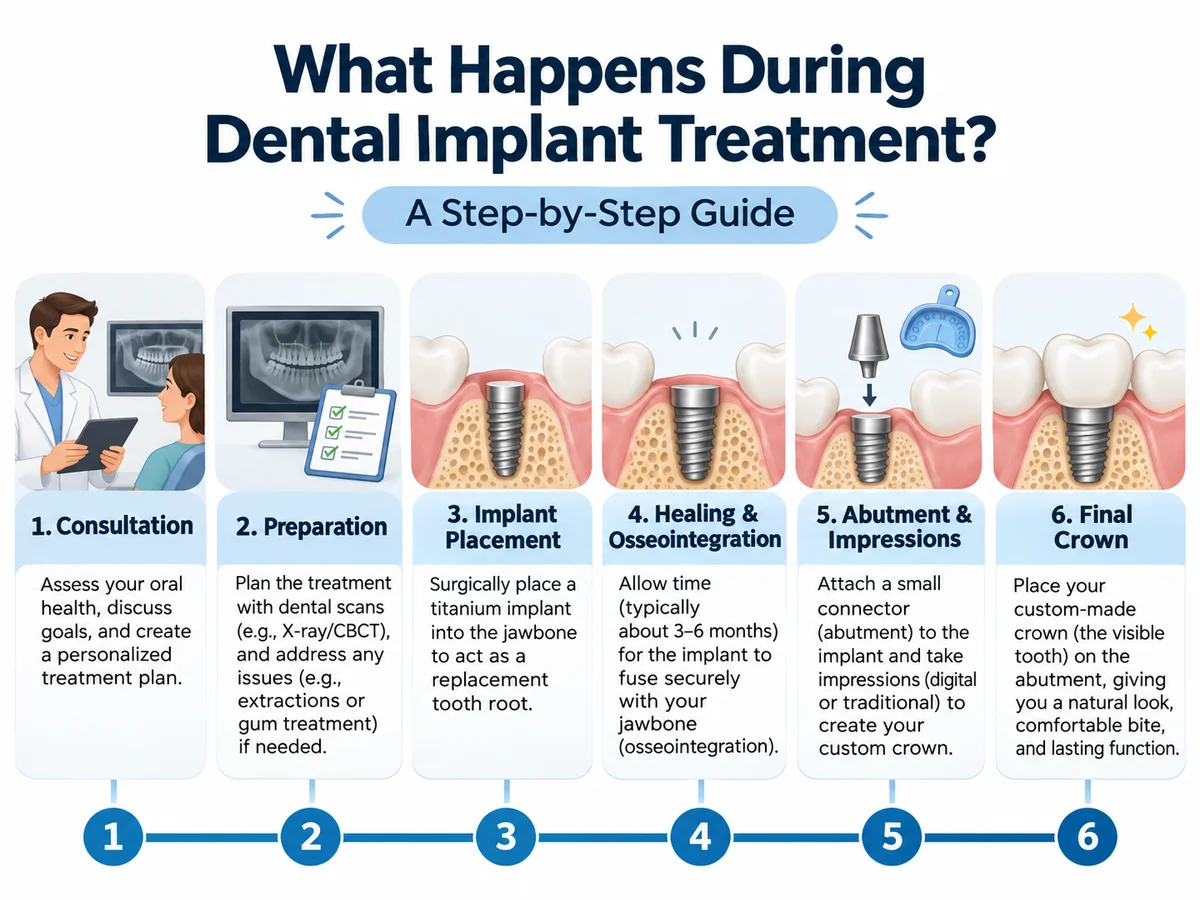
These timeframes are general estimates rather than a guaranteed treatment schedule.
Someone replacing a single missing tooth with sufficient healthy bone may have a shorter treatment journey than someone requiring extractions, bone grafting or several implants.
Step 7: Looking after your dental implant
Receiving your permanent replacement tooth does not mark the end of dental care.
Although an artificial crown cannot develop tooth decay like a natural tooth, the surrounding gum and bone remain vulnerable to inflammation and disease.
Poor oral hygiene can contribute to peri-implantitis, a condition involving inflammation and bone loss around an implant.
Long-term maintenance generally involves brushing twice daily, cleaning between teeth and attending regular dental examinations.
Your dentist may also recommend specific cleaning products or techniques suited to the design of your restoration.
You can learn more about ongoing oral healthcare in our guide to dental clinic services, from cleaning to cosmetic dentistry.
Questions worth asking before starting treatment
A treatment consultation is an opportunity to understand the entire process rather than simply discuss the surgical appointment.
Consider bringing the following questions with you:
- Do I have sufficient bone to support an implant?
- Will I need additional treatment before surgery?
- Can I have a temporary replacement tooth?
- How many appointments should I anticipate?
- What are the potential complications in my case?
- What is included in the written treatment quotation?
- What alternatives are available if implants are unsuitable?
- How should I maintain my implant after treatment?
Knowing the answers beforehand can help you organise work commitments, manage expenses and prepare for recovery.
Is dental implant treatment painful?
Local anaesthetic is generally used to manage pain during implant placement, although patients may experience sensations of pressure.
Some discomfort after surgery is expected, but its intensity and duration vary depending on the complexity of the procedure and individual circumstances.
If you are concerned about dental anxiety, discuss pain management and available sedation options with your dental professional before treatment.
Taking the first step towards replacing a missing tooth
Dental implant treatment is a carefully planned process that combines surgical care, biological healing and restorative dentistry.
Each stage serves a different purpose. The assessment establishes suitability, surgery positions the implant, healing creates a stable foundation, and the final restoration replaces the visible tooth.
Understanding this sequence can make the experience less unfamiliar and help you develop realistic expectations.
An individual dental assessment remains the best starting point for determining whether implants are suitable for you and what your treatment journey may involve.
This article provides general educational information and is not a substitute for individual dental advice.
You may also Like

What Is an LED Light Facial and What Happens During Your First Session?