



Which Garage Door Parts Can You Replace Yourself?
- November 11, 2026
- by
- thetradieguide@gmail.com
A garage door remote that has stopped responding might need a new battery. A door that hangs crooked needs a very different response. Both can send you searching for spare parts, but only one is a sensible starting point for a simple home fix.
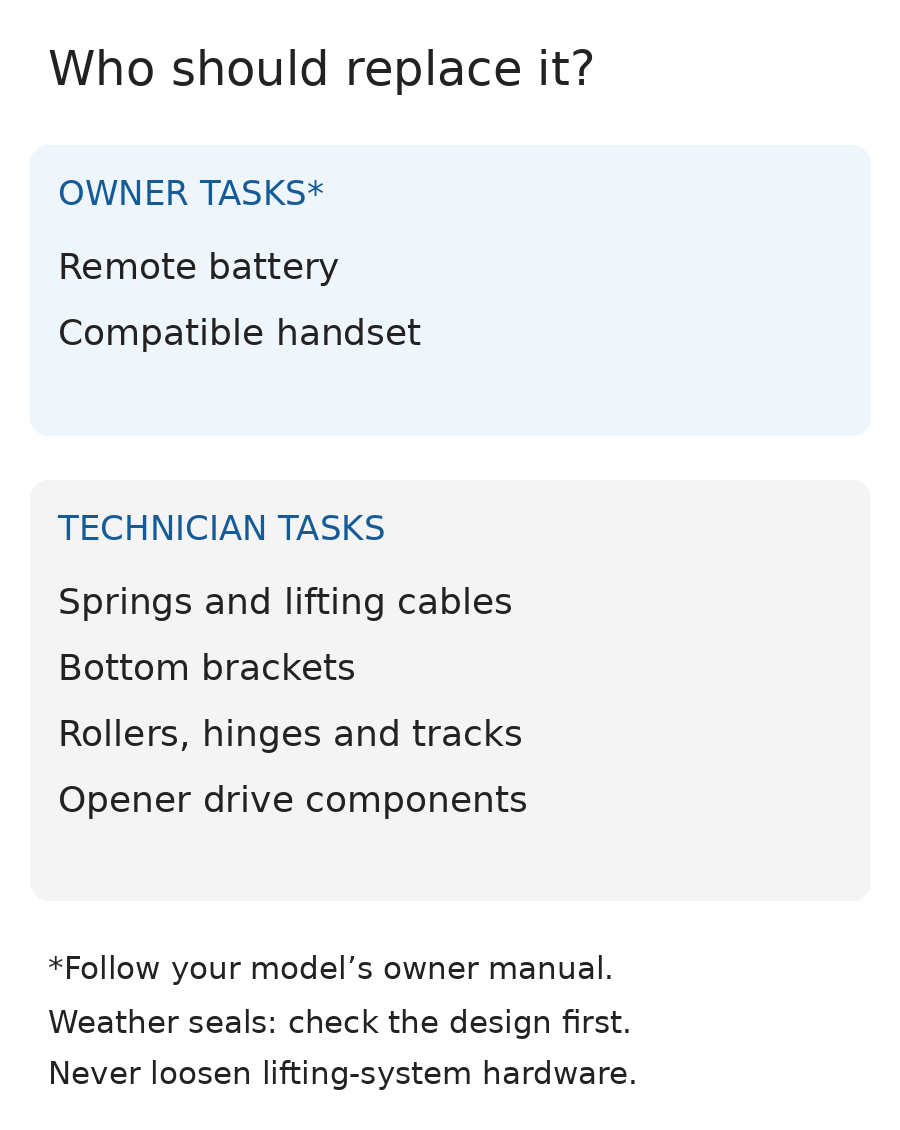
Remote batteries and compatible replacement handsets are usually the most manageable owner tasks. Springs, lifting cables, bottom brackets and other components that support or control the door’s weight should be handled by an experienced garage door technician. Australian manufacturers warn that these assemblies can release dangerous forces when disturbed. Steel-Line homeowner’s manual
The useful question is whether the replacement can be completed using the owner instructions, without interfering with the door’s lifting system.
Quick Overview
- Usually manageable: replacing a remote battery or programming a compatible handset according to the manual.
- Check the exact design first: weather seals and other accessories vary between doors.
- Arrange professional replacement: springs, cables, bottom brackets, rollers, hinges and tracks.
- Identify before ordering: record the door and opener models, then confirm the replacement part.
- Stop using a damaged door: avoid repeated operation if it is crooked, binding or has visibly damaged lifting components.
Start with the part you can identify
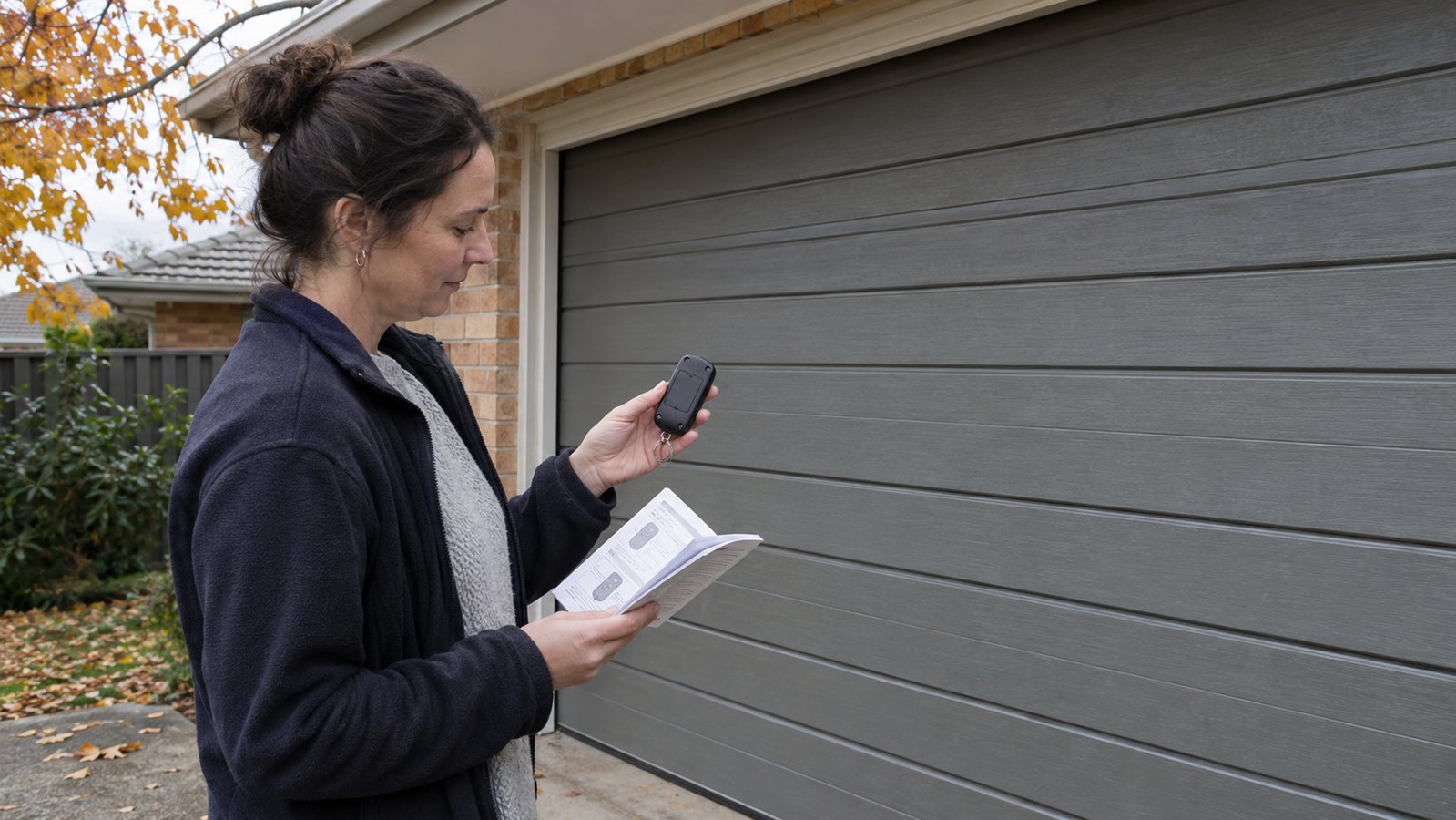
Before buying anything, establish whether the problem is with the handheld control, the opener or the door itself.
These are separate components. The brand printed on the door may differ from the brand on its electric opener, so a remote selected by the door’s badge alone may be unsuitable.
Look for accessible labels and record:
- The door manufacturer and model, if available.
- The opener manufacturer and model.
- The existing remote’s model or part number.
- What happens when you press the remote or wall control.
- Any recent change, such as an impact, unusual noise or intermittent response.
Take photographs from a safe position. Leave covers, brackets and lifting components in place.
For instance, if one remote fails while another still operates the door normally, investigating the faulty handset is a reasonable first step. If every control activates the opener but the door struggles to move, buying another remote is unlikely to address the problem.
Remote batteries: a reasonable first replacement
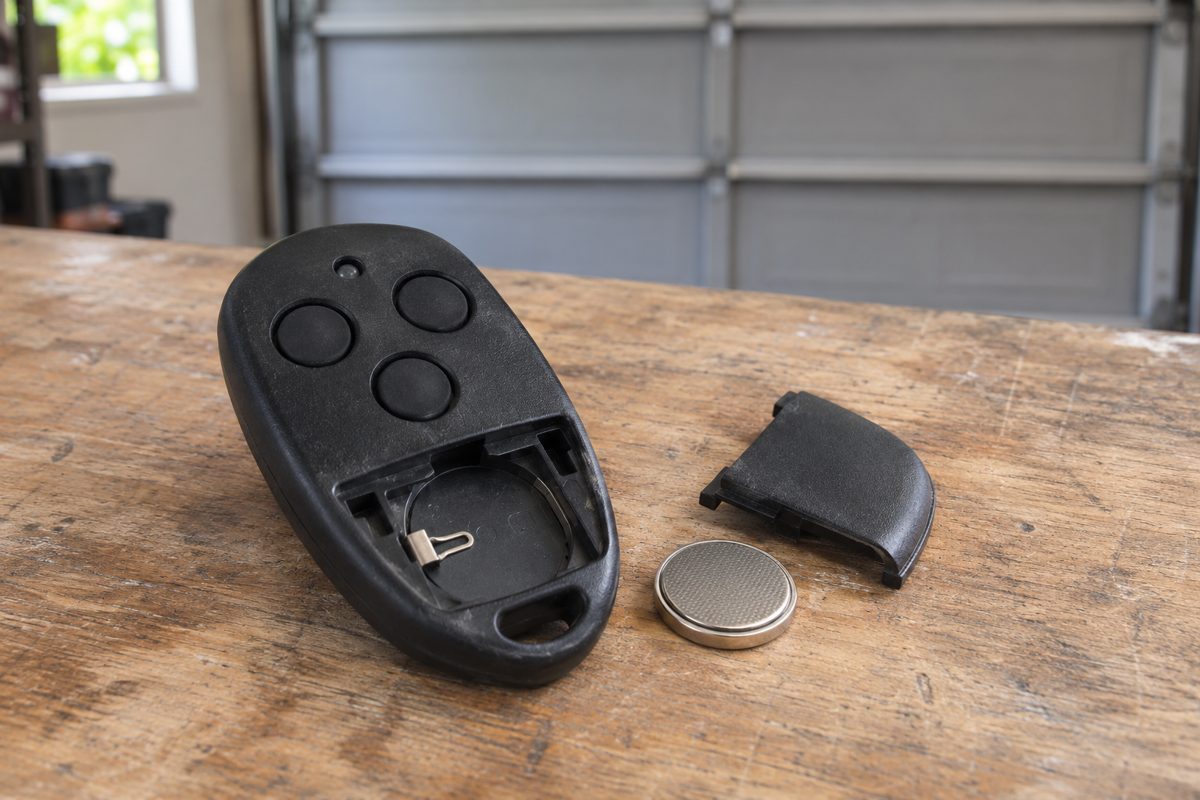
Replacing a remote battery is commonly covered in the owner instructions. B&D’s owner resources, for example, include battery changes and remote coding among their basic operating guides. B&D owner manuals
Use the specified battery type and follow the instructions for opening and securing the case. Check the polarity markings rather than relying on memory.
Work on a clear surface so small screws and the old battery do not disappear. Keep batteries away from children, and make sure the compartment closes securely before returning the remote to use.
A fresh battery does not rule out every handset problem. A damaged button, corroded contact or faulty remote may still need attention. If the replacement battery makes no difference, check the manual’s troubleshooting advice before buying further parts.
Replacement remotes: compatibility comes first
A replacement handset can also be suitable for an owner to set up when the manufacturer provides a straightforward programming procedure.
Confirm compatibility with the exact opener model. Similar-looking cases and broad “universal” descriptions are insufficient grounds for choosing a remote.
Before ordering, ask the supplier:
- Is this handset confirmed to work with my opener?
- Are programming instructions available for that combination?
- Can setup be completed through the normal owner controls?
- What should I do if the original remote has been lost?
Follow the model-specific instructions carefully. If setup requires access you cannot safely reach, or work beyond the owner procedure, arrange assistance.
Avoid experimenting with unrelated adjustment buttons. Remote programming and adjustments to how the door moves serve different purposes.
Weather seals need a closer look
A cracked seal along the bottom of a garage door may look like an easy replacement. Whether it is suitable for DIY depends on how that particular seal is attached and what must be disturbed to remove it.
Start by finding the manufacturer’s instructions. Check the seal profile, retaining method and required access before purchasing.
Treat it as a professional job if replacement involves loosening bottom fixtures, moving lifting cables, dismantling door hardware or holding a raised door in position. Steel-Line specifically warns owners never to loosen bottom-fixture fasteners because of their connection to the cable system. Steel-Line homeowner’s manual
A gap beneath the door also deserves investigation before ordering a thicker seal. Ask a technician to check the cause if the door sits unevenly or no longer closes as it previously did.
Which components should a technician replace?
The following parts belong in a professional assessment because they affect the door’s support, movement or lifting system.
| Component | Reason to arrange professional replacement |
|---|---|
| Springs | They store substantial energy and require correct selection and tensioning. |
| Lifting cables and drums | They work with the counterbalance system and carry significant loads. |
| Bottom brackets | They connect to the lifting cables and must not be casually loosened. |
| Rollers and hinges | Replacement can involve supporting sections and disturbing operating hardware. |
| Tracks and mounting hardware | Their positioning and attachment affect how the door is guided and supported. |
| Opener drive components | Diagnosis and replacement may require subsequent operational and safety checks. |
B&D describes inspection of springs, cables, rollers and tracks, along with balance and safety checks, as part of professional servicing. B&D’s guide to owner maintenance and professional servicing
If you need help identifying a mechanical component, a specialist’s Garage Spare Parts service can provide a starting point for discussing replacement. Supply the model information and photographs, then confirm whether diagnosis and installation are needed before ordering.
A noise does not identify the failed part
Squeaking, rattling or jerky movement may tempt you to buy whichever component appears worn. However, a symptom alone does not establish what needs replacing.
A useful service enquiry describes the behaviour precisely: “The door starts closing, stops near the floor and reverses” gives more information than “the motor is broken”.
Daily Highlights’ guide to signs your garage door needs service and repairs covers changes worth reporting. Use those observations to explain the issue rather than attempting to reproduce a fault repeatedly.
If the door is crooked, partly off its track or has a visibly frayed cable, keep people away and contact a technician. Do not pull the emergency release on a raised door that may have a damaged spring or lifting system.
Maintenance and replacement are different jobs
Owners can still take a useful role in caring for their garage door.
B&D identifies visual inspection and regular cleaning as tasks homeowners can undertake between professional services. Inspect from a safe position and report damaged components rather than touching or adjusting them. B&D’s guide to owner maintenance and professional servicing
Follow your own manufacturer’s care instructions for cleaning products and any permitted lubrication. Avoid applying a general instruction to every moving component: different doors use different materials and mechanisms.
Cleaning also creates an opportunity to notice changes early. A photograph of new corrosion or a brief record of intermittent operation can help explain the issue when arranging a service.
Choose the job before buying the part
A remote battery or compatible handset may be a practical replacement you can manage with the correct owner instructions. A mechanical repair needs a closer assessment of what the part does and what its removal could release or leave unsupported.
Identify the equipment, describe the symptom and confirm compatibility before spending money. Where a task involves the door’s weight, spring tension, lifting cables or supporting hardware, arrange a technician. That approach gives you a clearer repair decision and reduces the chance of buying a component that never addressed the original problem.
You may also Like

What Is a Tree Root Investigation Report and When Do You Need One?
What Affects the Cost of Pool Renovations in Australia?