




What Is a Tree Root Investigation Report and When Do You Need One?
- November 18, 2026
- by
- thetradieguide@gmail.com
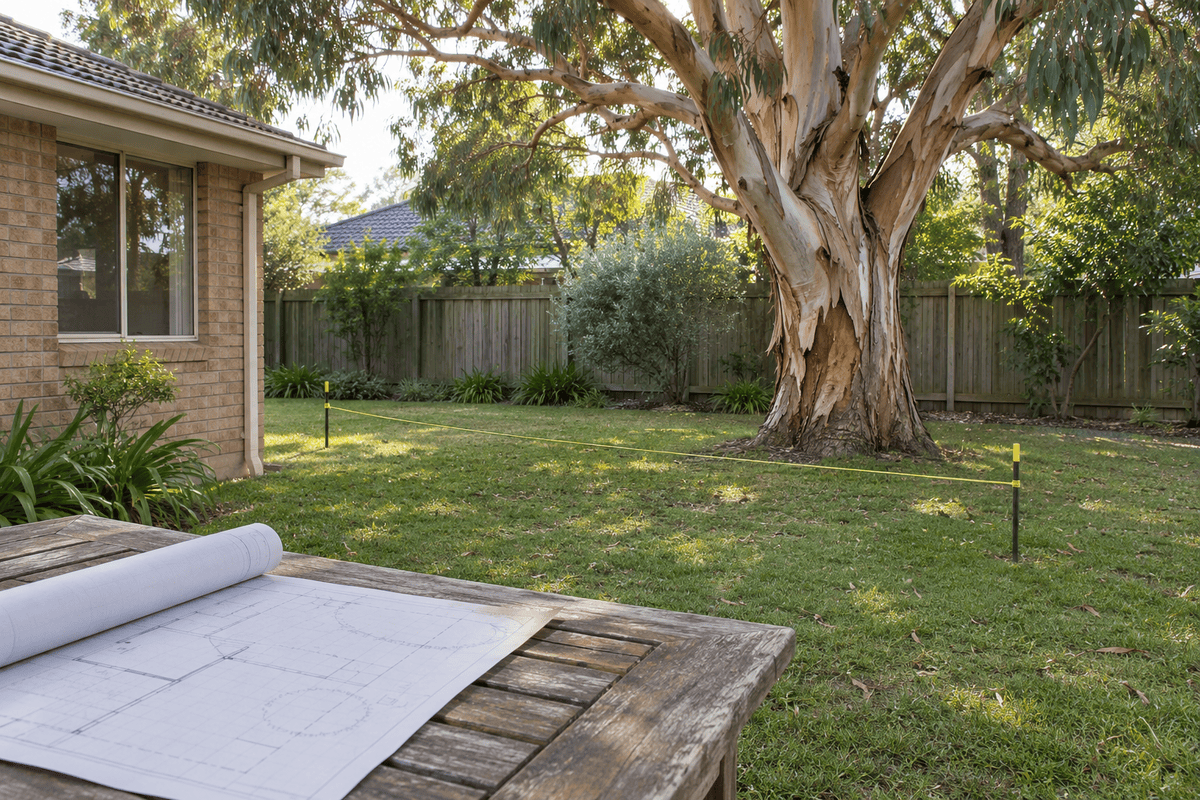
The plans for your extension show a new footing near a mature tree. Above ground, there’s room for both. The question is what the excavation would encounter below ground and whether the tree could safely remain if the work went ahead. A tree root investigation gives your designer and arborist evidence to work with while there’s still time to change the plans. North Sydney Council guidance
Quick overview
A tree root investigation report records where roots were found in a defined part of a property, along with details such as their size and depth. It’s most useful when planned excavation may affect a tree you need to retain, when council requests root mapping, or when an engineer needs evidence to investigate possible root-related damage. The findings apply to the area inspected and the depth reached.
When is it worth getting a report?
| Your situation | What to do first |
|---|---|
| You’re planning an extension, retaining wall, driveway or underground service near a tree. | Give a consulting arborist the latest plans. Ask whether investigating the proposed excavation line would help the design team decide where or how to build. |
| Council has requested a root mapping report. | Send the written request to the arborist. Confirm which trees and work areas the report needs to cover and what council expects to see. |
| You’ve found cracks in a wall or signs of movement near a tree. | Ask a structural engineer to assess the damage. If root location is relevant, the engineer can help the arborist identify where to investigate. |
| A drain keeps blocking and you suspect roots. | Start with a licensed plumber. A drain camera can help locate the blockage and show what’s happening inside the pipe. |
A tree on adjoining land can also be relevant if its roots extend into the proposed work area. Check the requirements for your property with your council. Inner West Council, for example, sets out separate documentation requirements for development near trees, suspected structural damage and plumbing damage. Inner West Council guidance
What the arborist looks for below ground
The investigation starts with a specific question, such as whether substantial roots cross the proposed line of a retaining wall. The consulting arborist uses the site plans and the location of the tree to decide where to look. Depending on the site, careful hand excavation or compressed air can expose roots while limiting disturbance. TMC Reports’ tree root investigation service explains how the work area and excavation method are selected for development projects.
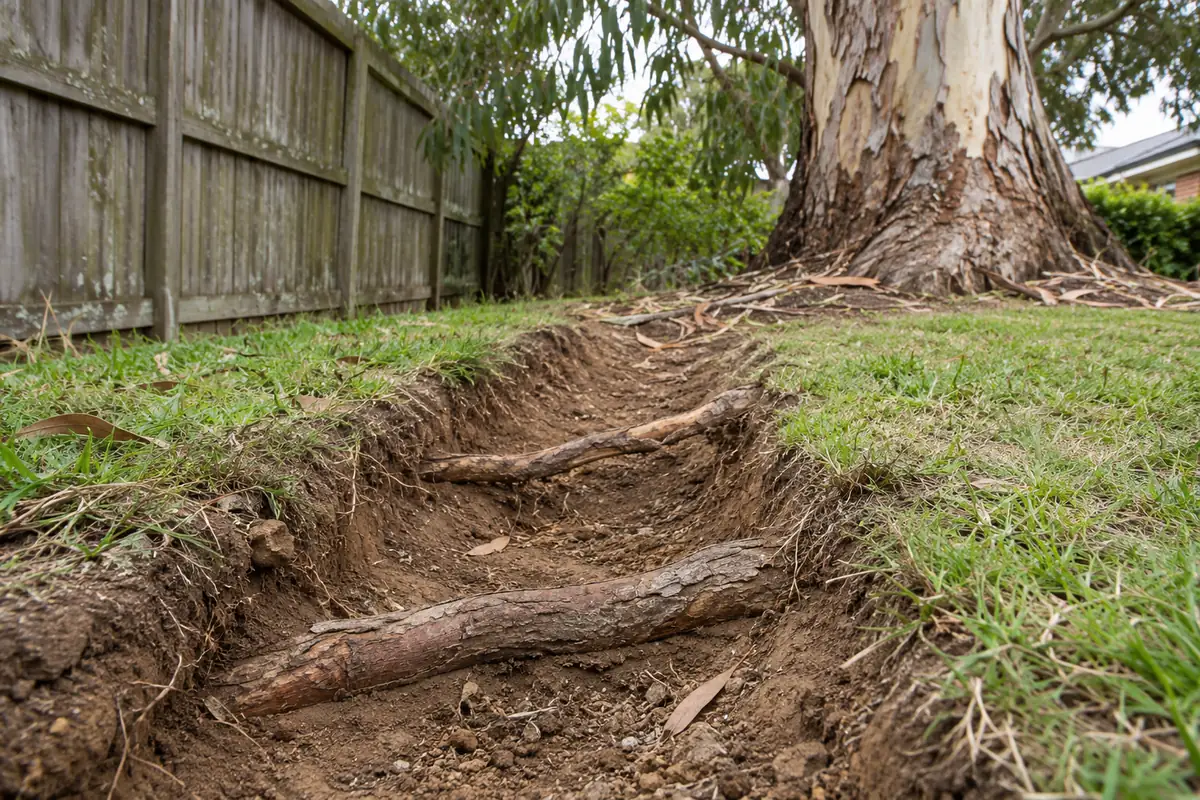
The report should show where the arborist looked, how deep the investigation went and what they found. A marked-up plan can locate the inspected trenches or pits relative to the tree and proposed work. Measurements and photographs can document the roots exposed. The arborist then interprets those observations in light of the proposed excavation and the tree’s health and stability.
Pay attention to the investigation limits. If no roots were found along one trench, that finding applies to the soil exposed in that trench. A revised footing position or a deeper excavation can put the work into soil the arborist hasn’t inspected.
How the findings can change a design
Imagine a proposed retaining wall runs beside a mature tree. The arborist finds several substantial roots crossing one end of the proposed excavation line. With those roots marked on the plan, the designer and engineer can look at moving the wall, changing the footing layout or using a different construction method. The arborist can then review the revised proposal against what was found on site.
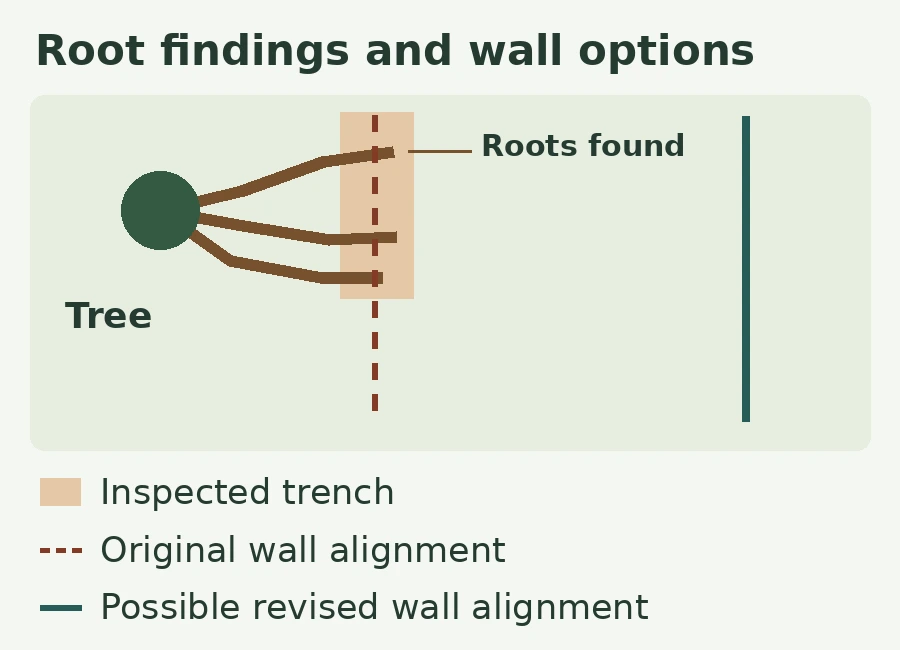
That’s what makes timing important. If the position or depth of the work is still open to change, the report can inform the drawings before the builder prices the job. If the drawings have already changed, make sure the arborist sees the current revision. For more on coordinating design and construction, see Daily Highlights’ guide to planning a home renovation.
What to send before booking
Send the arborist the latest site plan, any drawings that show excavation depths, photos of the tree and work area, and any written request from council. If the investigation relates to damage, include any engineering or plumbing findings you already have. Then ask a question tied to the decision you need to make. For example, “Can you check for roots along the proposed footing line shown on this plan and explain what the findings mean for keeping the tree?”
A clearly scoped report should leave you knowing which part of the site was assessed, what the findings mean for the current plans and whether a design change or further investigation is needed.
You may also Like
What Affects the Cost of Pool Renovations in Australia?
Which Garage Door Parts Can You Replace Yourself?